Kids & Teens
Heard Your Child Snoring on Vacation? What It Can Mean
Published 7 min read
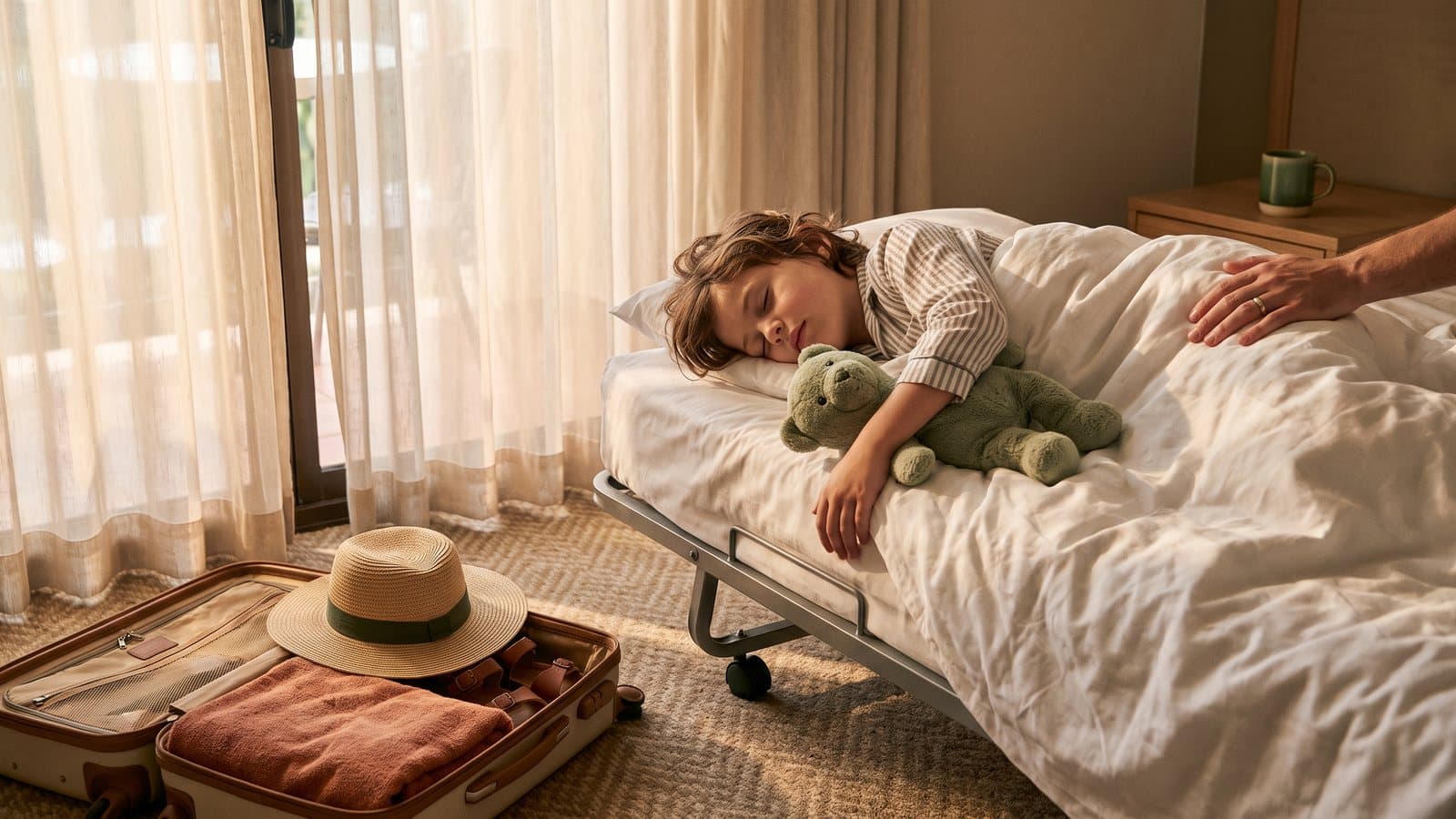
The Night You Hear It in a Shared Hotel Room
The day was full: a long drive, a pool that closed too early, a late dinner. Now the lights are off, everyone is packed into one hotel room, and from the rollaway bed comes a sound you did not expect. Your child is snoring.
At home, you are down the hall with the door half closed. On a summer trip, you may share a room for the first time in months and finally hear what your child's nights sound like. For many parents, that is where the questions about child snoring begin.
That moment is useful information, not a reason for alarm. Here, Austin Sleep & Airway Health walks through what snoring in kids can mean, why it may show up on vacation, what to track at home, and when a closer look at your child's airway makes sense.
Is It Normal for a Child to Snore?
Occasional snoring is common in kids, especially during a cold or an allergy flare. The American Academy of Otolaryngology, Head and Neck Surgery notes on its patient site, ENThealth.org, that about 1 in 10 children snore regularly, while a much smaller group have obstructive sleep apnea. In other words, many children who snore do not have sleep apnea.
Regular snoring is still worth mentioning. The American Academy of Pediatrics recommends that pediatricians ask about snoring at routine checkups, and that a child who snores regularly and shows other signs of disrupted sleep get a closer look. Healthy sleep in a child usually sounds quiet and easy, so steady snoring is a signal to pay attention to, not a verdict.
Why Kids Snore More on Trips (or Why You Only Just Noticed)
Two possibilities are worth separating, because they point to different next steps.
Something about the trip
A cold picked up on the plane, or allergens in a new place (a rental's carpets, a relative's pet, unfamiliar pollen), can leave the nose stuffy for a few nights. Children's Hospital of Philadelphia notes that it is common for children to snore when they have a cold. That kind of snoring generally eases as the congestion clears.
Something that was there all along
Sometimes the trip does not cause the snoring. It reveals it. Many families rarely share a room overnight, so a months-long pattern can go unheard until vacation. The way to tell the difference is to listen again once you are home and everyone is healthy.
What Child Snoring Can Mean
Snoring is the sound of air squeezing through a narrowed passage, which makes the soft tissues of the nose and throat vibrate. MedlinePlus, from the National Library of Medicine, explains that in children this narrowing is often linked to large tonsils or adenoids. Congestion and the shape of the airway itself can also play a part. None of the patterns below is a diagnosis, but each helps you describe what you heard.
Light snoring that comes and goes
Soft snoring that shows up with a cold or in a new bed, then fades, is the most common pattern and often not a concern on its own.
Loud snoring on most nights
Snoring that is loud, happens most nights, and continues when your child is healthy is the pattern worth discussing with your child's doctor.
Pauses, gasps, and effortful breathing
Snoring that stops, goes quiet, and restarts with a gasp or snort is worth mentioning soon. So is breathing that looks like work: a child who routinely sleeps with the mouth open and the neck stretched back, whose chest seems to pull inward with each breath, or who sweats heavily through the night.
What You Can Do Now: Track the Snoring at Home
You do not need to sort this out on vacation. Give any travel cold a chance to clear, then spend about two weeks listening at home. A simple log turns a worried hunch into something a clinician can use:
- Nights per week. Pediatric research often defines habitual snoring as three or more nights a week, so a count beats a general impression.
- Loudness and pattern. Soft and steady, audible through a closed door, or broken up by pauses and gasps.
- A short phone video. Record a minute or two about an hour after your child falls asleep, sound on, chest and face in view.
- Position and mouth. Mouth open or closed, head tipped back, unusual positions.
- Mornings and context. Hard to wake or groggy, plus any colds or allergy flares that week.
Bring the log and video to your child's next visit. They spare you from describing a sound from memory.
When Child Snoring Is Worth an Evaluation
Once your child is healthy and home, it is reasonable to ask for an evaluation if you notice snoring on most nights, snoring loud enough to hear from another room, pauses followed by gasps or snorts, or breathing that looks effortful. The same goes for a child who is often hard to wake or seems unrested after a full night in bed.
A good first stop is your child's pediatrician, who may involve an ENT to look at the tonsils and adenoids or a sleep physician to order a sleep study. Only a physician can diagnose sleep apnea, and in children that usually means an overnight study called polysomnography. If you ever see your child struggling to breathe, or notice the lips or skin turning pale or bluish, seek medical care right away rather than logging another night.
Our role is the airway itself. An airway-focused dental evaluation can sit alongside your pediatrician's care and show how your child's mouth, jaw, and airway are developing. For a starting point before any appointment, our age-based sleep screenings are an educational way to organize what you have noticed. They do not confirm or rule out anything.
How Austin Sleep & Airway Health Helps With Child Snoring
Dr. Kacie Culotta, DMD, is a Diplomate of the American Board of Dental Sleep Medicine with over a decade of experience as a family dentist, lactation counselor, and myofunctional specialist. Her focus is how a child breathes and grows, and how that connects to sleep.
An evaluation starts with a detailed sleep and health history, including your log and video. The airway-focused exam looks at tongue mobility and resting posture, oral ties, palate width, bite, tonsil size, nasal versus mouth breathing, and signs of clenching or grinding.
When imaging is appropriate, our in-house 3D CBCT airway imaging takes about 45 seconds and uses a low level of radiation. It gives Dr. Culotta an awake, upright view of airway shape and volume, the tonsils and adenoids, the nasal passages, and jaw position. It is not a sleep study and does not diagnose sleep apnea.
From there, we connect the dots with your child's pediatrician, ENT, sleep physician, orthodontist, and myofunctional therapist, including the independent therapists who work on-site in our Myofunctional Collaborative Space. For kids whose jaws are still growing, that conversation can include whether early palatal expansion may be appropriate. As Dr. Culotta puts it, "Positive change is possible at any age. Awareness is the first step."
Frequently Asked Questions
Will my child grow out of snoring?
Some children snore less as they grow, especially when colds or allergies were the cause, but loud snoring on most nights deserves a look rather than a wait. The answer depends on what is behind the snoring, which a pediatrician or ENT can help sort out.
Can allergies or a cold make my child snore?
Yes, congestion from a cold or allergies can narrow the nasal passages and cause temporary snoring that usually fades once the stuffiness clears. If snoring continues on healthy nights, or congestion lingers for weeks, ask your physician or allergist about options.
Should I record my child snoring for the doctor?
Yes, a short phone video with the sound on can be one of the most useful things you bring, because snoring rarely happens on cue in an exam room. Note the date and whether your child was sick that week.
What does it mean if my child stops breathing for a few seconds while snoring?
Pauses in breathing followed by a gasp or snort are worth reporting to your child's pediatrician soon, because they are one of the signs a physician may want to evaluate with a sleep study. Capture it on video if you can.
Does my child need a sleep study for snoring?
Not every child who snores needs a sleep study, but the American Academy of Pediatrics recommends one when a child snores regularly and also shows other signs of disrupted sleep. Your pediatrician or a sleep physician makes that call and interprets the results.
Where can I get my child's snoring evaluated in Austin?
Austin Sleep & Airway Health offers airway-focused evaluations for kids and teens at 1701 Simond Ave, Suite 107A, in Austin's Mueller area. Call (512) 900-9715 to schedule, and we are glad to coordinate with your child's pediatrician, ENT, or sleep physician.
Your Next Step After the Summer Trip
If a summer trip gave you your first real listen to your child's sleep, you are already doing the most important part: paying attention. A good next step is our educational sleep screening for ages 6 to 12, which can help you decide whether an evaluation makes sense. It is a calm place to start, and when you are ready, our team is here to take a closer look at how your child breathes, sleeps, and grows.
By Austin Sleep & Airway Health
This article is for general education. It is not a diagnosis and does not replace an evaluation with a qualified provider.
Wondering about your child's sleep and breathing?
Our educational screening for children ages 6 to 12 takes a few minutes and helps you decide whether an airway evaluation is worth a look.
Keep Reading
Related articles
Kids & Teens
Why Is My Teenager Always Tired?
If your teenager is always tired despite sleeping in on weekends, here is what is typical teen sleep biology and when airway signs deserve a look.
Read more7 min read
Kids & Teens
Thumb Sucking and Teeth: What Summer Break Reveals
Thumb sucking and teeth: how a habit that lingers past toddler years can shape a child's bite and breathing, plus what to try this summer break.
Read more7 min read
Kids & Teens
Bedwetting and Sleep Apnea: Could Breathing Be a Factor?
Bedwetting and sleep apnea can be connected in some children. Learn common causes, how breathing may factor in, and when a closer look helps.
Read more7 min read