Kids & Teens
Enlarged Tonsils and Adenoids in Kids: Sleep and Breathing
Published 7 min read
Another Spring Cold, and the Snoring Is Back
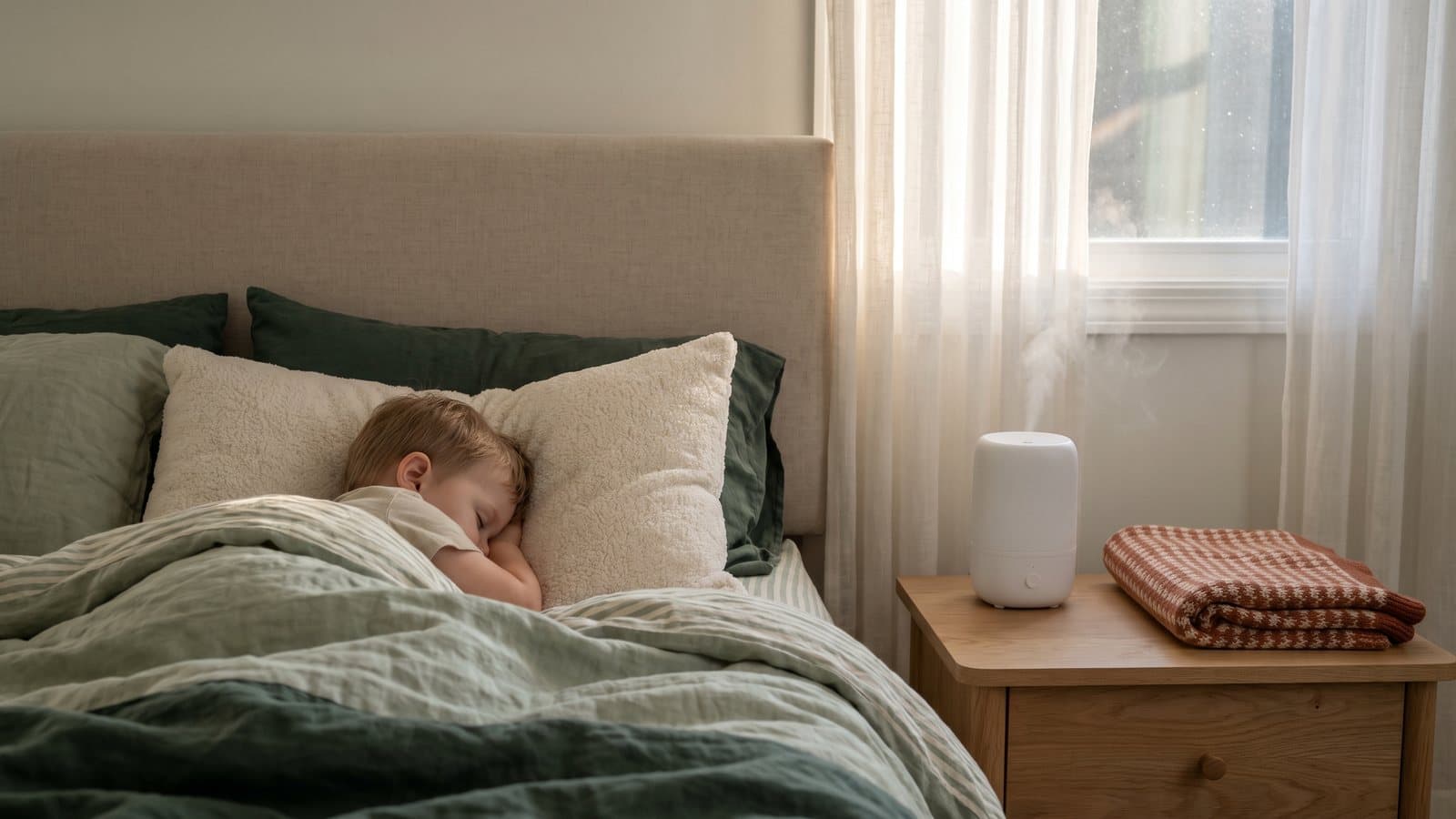
Your child has had a runny nose on and off since late winter. Between that last cold and the pollen drifting through Austin this time of year, the mouth breathing and snoring at night never fully went away. You find yourself standing in the doorway again, listening.
For a lot of families, that pattern points to enlarged tonsils and adenoids, the two areas of tissue in the back of the throat and behind the nose that swell easily in young children, especially during a season stacked with colds and allergy triggers. Most of the time it settles on its own within a couple of weeks. Sometimes it does not, and the extra swelling becomes more of a habit than a passing cold.
At Austin Sleep & Airway Health, we talk with parents about this often, especially in spring. Here is how to tell ordinary seasonal congestion from tonsils and adenoids that stay enlarged, what to watch for at home, and where an airway focused look fits alongside your child's pediatrician and ENT.
What Are Enlarged Tonsils and Adenoids?
Tonsils are the two soft lumps you can see at the back of the throat. Adenoids sit higher up, behind the nose, where you cannot see them without a mirror or a small scope. According to the American Academy of Otolaryngology, Head and Neck Surgery (AAO-HNS), both are part of the immune system, sampling germs that enter through the mouth and nose while a child is young.
That job means tonsils and adenoids swell often. A cold, a sinus infection, or an allergy flare can make them puff up for a week or two, then settle back down once the illness passes. The American Academy of Pediatrics (AAP) notes that some children are simply born with a larger adenoid, and others develop temporary swelling with colds and other infections, which is especially common in young kids.
The distinction that matters for parents is timing. Swelling that rises and falls with each cold is a different picture than tonsils or adenoids that stay large and keep breathing effortful between illnesses, long after the runny nose is gone.
Signs Your Child's Tonsils or Adenoids May Be Enlarged
Enlarged tonsils and adenoids show up differently depending on whether your child is asleep or awake.
At night
Snoring most nights, breathing through an open mouth, restless tossing, or brief pauses in breathing are the signs parents notice first. Some kids sweat heavily during sleep or end up in odd positions, like sleeping with the neck stretched back, as if trying to open the airway further.
During the day
Watch for a child who breathes through the mouth at rest, sounds nasal or stuffy even without a cold, snores through naps, or seems unusually tired, irritable, or unfocused given a full night in bed. Frequent ear infections or a voice that always sounds a little congested can point the same direction. Our post on why some kids sleep with their mouth open covers the daytime half of this pattern in more depth.
None of these signs on their own means a child's tonsils or adenoids need attention. Together, and especially when they outlast a cold, they are worth a closer look.
What You Can Track Before Your Child's Evaluation
You do not need to diagnose anything at home. A little tracking over one or two weeks makes any visit, whether with your pediatrician, an ENT, or our office, far more useful.
- Nighttime pattern: how many nights out of seven your child snores, mouth breathes, or seems restless. A short phone recording can capture more than memory does.
- Daytime pattern: mouth breathing at rest, a nasal sounding voice, or daytime tiredness that seems out of proportion to how much sleep your child got.
- Timing: whether the swelling started with a specific cold or allergy season, and whether it has ever fully returned to normal between illnesses.
- Other clues: frequent ear infections, trouble swallowing certain foods, or a bite or jaw pattern that has changed.
Our educational sleep screening for ages 2 to 5 can help you organize what you are noticing before a visit. It is educational, not diagnostic, and does not confirm or rule out anything on its own.
When Is It Worth an Airway Evaluation?
An evaluation is worth considering when snoring, mouth breathing, or restless sleep show up most nights for several weeks, especially outside of an active cold. It is also worth asking about if your child has frequent ear infections, a voice that always sounds congested, or daytime tiredness and irritability that concern you or a teacher.
None of this means your child has a sleep disorder. It means the pattern deserves a closer look from the right people. Mention what you are tracking to your pediatrician, who may refer you to an ENT for a direct look at the tonsils and adenoids.
What about surgery?
Many parents ask this early, and it is a fair question. Whether to remove tonsils or adenoids is a decision for your child's ENT and pediatrician, made together and based on a direct exam, your child's history, and sometimes a sleep study. The AAP notes that physicians today take a more conservative approach to this surgery than in the past, since much of the swelling resolves on its own as children grow.
Our part is different. We look at the airway from a dental and breathing standpoint through in-house CBCT airway imaging and an exam, and we share what we see with your child's ENT or pediatrician so they have a fuller picture for that decision.
How Austin Sleep & Airway Health Helps With Enlarged Tonsils and Adenoids
Dr. Culotta's airway focused exam looks at tonsil size, tongue mobility and resting posture, nasal versus mouth breathing, palate width, bite, and a detailed sleep and health history. It is one more set of eyes on a pattern many parents have already noticed at home.
When it adds clarity, our in-house 3D CBCT airway scan takes about 45 seconds and uses a low dose of radiation. It shows airway shape and volume, along with the tonsils, adenoids, nasal passages, and jaw position, all in one awake, upright image. A CBCT scan is not a sleep study, and it does not diagnose sleep apnea. Sleep apnea is diagnosed only by a physician, through a sleep study.
We do not tell families whether to have tonsils or adenoids removed. That call belongs to your child's ENT and pediatrician. What we offer is the airway piece of the puzzle, plus coordination with your child's sleep physician, ENT, or myofunctional therapist so every provider is working from the same information. As Dr. Culotta puts it, "It's never too late to breathe, sleep, and feel better."
Frequently Asked Questions
What is the difference between enlarged tonsils and enlarged adenoids?
Tonsils sit visibly at the back of the throat, while adenoids sit higher up behind the nose and cannot be seen without a mirror or scope. Both are lymph tissue that helps fight infection in early childhood, and either or both can become enlarged at the same time.
Can a cold or spring allergies make my child's tonsils and adenoids look bigger temporarily?
Yes, colds and allergy flares commonly cause tonsils and adenoids to swell for a week or two before settling back down. The AAP notes that this kind of temporary enlargement is especially common in young children during and after an infection.
Is snoring in a toddler always a sign of enlarged tonsils and adenoids?
No, occasional snoring during a cold is common and usually not a concern on its own. Snoring that continues most nights, or that comes with mouth breathing and restless sleep between illnesses, is what is worth mentioning to your pediatrician.
Will my child's adenoids grow back after they are removed?
Adenoid tissue rarely grows back enough to cause problems again, since a small amount of tissue may remain after surgery but usually stays quiet. Research reviewing children after adenoid removal has found that regrowth causing symptoms is uncommon.
Do enlarged tonsils and adenoids always need to come out?
No, many children's tonsils and adenoids shrink on their own as they grow, and the AAP describes today's physicians as more conservative about recommending removal than in the past. When treatment is discussed, it is decided by an ENT and pediatrician based on a direct exam and your child's pattern.
Do enlarged tonsils and adenoids cause ear infections?
They can contribute, since adenoid tissue sits near the opening of the tube that drains the middle ear, and swelling there can make ear infections more frequent for some children. Mention a pattern of repeat ear infections to your pediatrician alongside any breathing or sleep concerns.
Where can my child get an airway evaluation for enlarged tonsils and adenoids in Austin?
Austin Sleep & Airway Health offers airway focused evaluations for kids at 1701 Simond Ave, Suite 107A, in Austin's Mueller area. Call (512) 900-9715, or reach us at hello@austinsleephealth.com. We're open Monday, Tuesday, Thursday, and Friday from 8:00 AM to 3:00 PM.
A Calm Next Step for Spring Congestion That Will Not Quit
If this spring's colds and allergies have left your child snoring, mouth breathing, or restless most nights, you do not have to guess whether it is worth mentioning. Try our educational sleep screening for ages 2 to 5 to organize what you have noticed, then bring it to a calm evaluation where Dr. Culotta can look at the airway piece alongside your pediatrician and ENT.
By Austin Sleep & Airway Health
This article is for general education. It is not a diagnosis and does not replace an evaluation with a qualified provider.
Noticing something about your little one's sleep?
Our educational screening for children ages 2 to 5 helps you sort out which night signs are worth mentioning at an evaluation.
Keep Reading
Related articles

Kids & Teens
Why Is My Teenager Always Tired?
If your teenager is always tired despite sleeping in on weekends, here is what is typical teen sleep biology and when airway signs deserve a look.
Read more7 min read
Kids & Teens
Thumb Sucking and Teeth: What Summer Break Reveals
Thumb sucking and teeth: how a habit that lingers past toddler years can shape a child's bite and breathing, plus what to try this summer break.
Read more7 min read
Kids & Teens
Bedwetting and Sleep Apnea: Could Breathing Be a Factor?
Bedwetting and sleep apnea can be connected in some children. Learn common causes, how breathing may factor in, and when a closer look helps.
Read more7 min read