
Kids & Teens
Why Is My Child Grinding Their Teeth at Night?
Published 7 min read
The Sound Coming From Your Child's Room
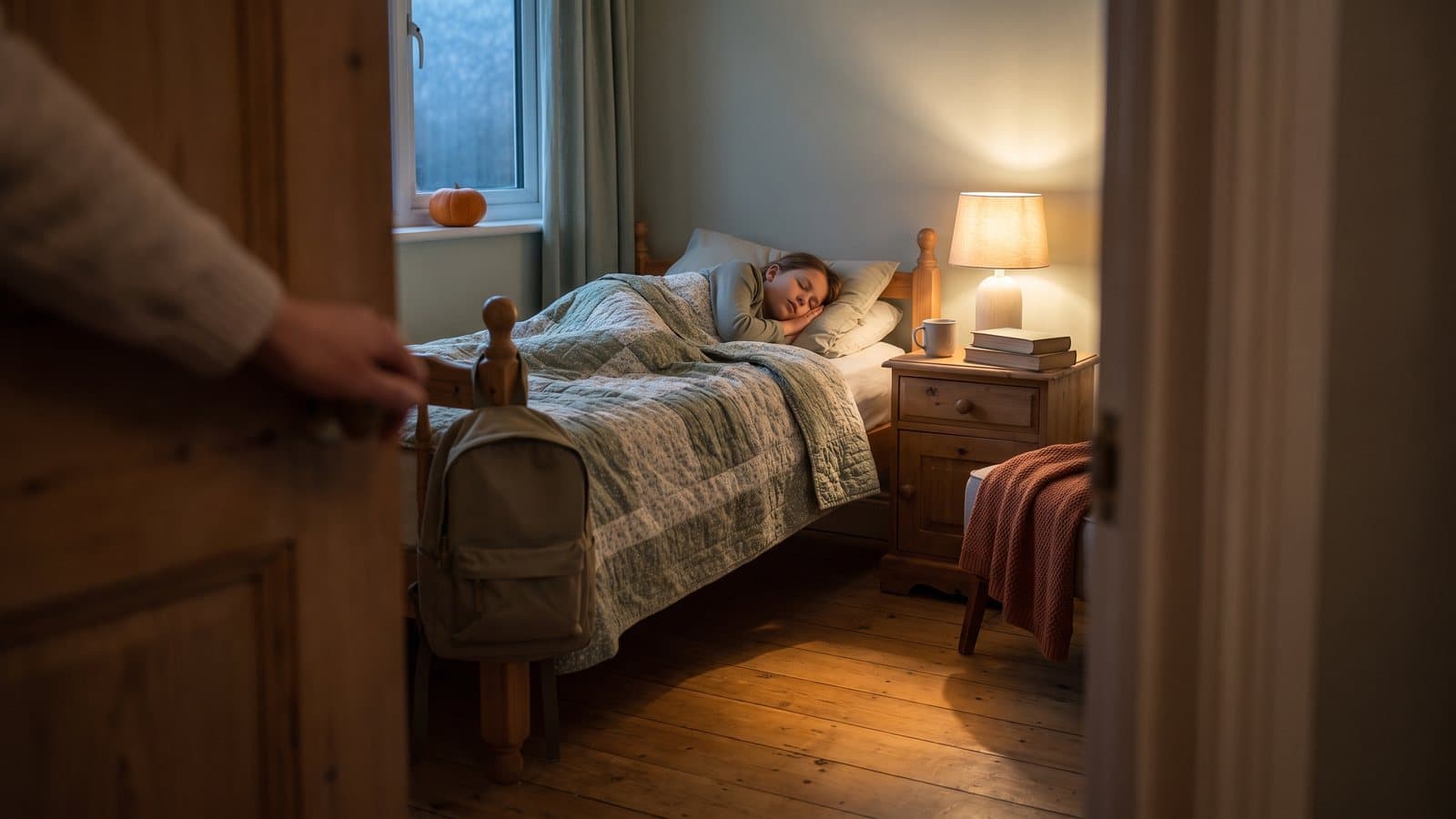
It is a school night in late October. The backpack is packed, the lights are out, and as you pass your child's door you hear it: a gritty, squeaky scrape, like someone chewing gravel. Your child is asleep and grinding their teeth.
If you have been wondering about your child grinding teeth at night, you are in good company. It is one of the most common things parents notice after bedtime, and it often shows up when life gets full, like mid-semester, with tests, projects, practices, and shifting friendships.
Most of the time, grinding is not a reason for alarm. It is information. Here, Austin Sleep & Airway Health walks through why kids grind, how sleep and breathing fit in, what to track at home, and when a closer look makes sense.
Is It Normal for a Child to Grind Their Teeth at Night?
Often, yes. Teeth grinding (the clinical term is bruxism) is common in childhood, and Nemours KidsHealth notes that most kids outgrow it as they lose their baby teeth.
Estimates of how common it is vary widely: a 2014 systematic review in the Dental Press Journal of Orthodontics found reported rates in children ranging from about 6 percent to nearly 50 percent, largely depending on how each study defined and measured grinding.
A 2018 international consensus paper on bruxism notes that in otherwise healthy people, grinding is better understood as a behavior than a disorder, which makes the more useful question what might be driving it for your child, and whether it is causing trouble for their teeth, jaw, or sleep.
Why Do Kids Grind Their Teeth in Their Sleep?
There is rarely one single cause: a 2021 literature review described childhood grinding as complex, with likely reasons falling into three broad groups.
A mouth that is still changing
Between about ages 6 and 12, baby teeth loosen while permanent teeth arrive, keeping the bite in flux. Children's Hospital of Philadelphia links grinding most often to teething or misaligned teeth, and KidsHealth adds pain, such as an earache, as another common trigger.
Stress and a full semester
KidsHealth points to everyday stress such as a test, a change in routine, or arguments at home, and a 2023 systematic review in Frontiers in Oral Health linked higher anxiety in children and their mothers, plus learning and behavior challenges, to grinding, flagging heavy screen time as a predictor. That does not mean a grinding child is anxious or unhappy: plenty of relaxed, thriving kids grind too, and a busy season is simply one piece of the picture.
Sleep and breathing
This is where our work focuses: the same Frontiers review linked parent-reported grinding to sleep-disordered breathing, enlarged tonsils, restricted tongue mobility, and nasal obstruction.
Can Teeth Grinding Be a Sign of a Breathing Problem?
It can be one clue, but it is not proof of anything on its own. A systematic review in the journal Oral Diseases, which analyzed 29 studies, concluded that grinding and sleep-related breathing problems are associated in children and teens, though the evidence is low and no study showed which one comes first.
Some researchers propose that jaw activity during sleep may, in certain children, be part of the body's response to a narrowed airway, one reason bruxism experts now describe grinding as a possible risk factor for some and a possibly protective one for others.
Grinding by itself tells you very little. Alongside other sleep signs, such as snoring on most nights, mouth breathing, pauses or gasps, restless sleep, or a child who wakes tired or cranky, it tells you more. If you have already been listening for snoring at night, grinding belongs in the same notes.
What You Can Do Now: Keep a Two-Week Grinding Log
You do not need answers yet to be helpful. A simple log turns a worried hunch into something your child's dentist or doctor can use. For about two weeks, jot down:
- Nights and timing. Which nights you hear grinding, and roughly when.
- What comes with it. Snoring, mouth breathing, pauses, gasps, or lots of tossing and turning.
- Mornings. Complaints of a sore jaw, face, or head, or real trouble waking up.
- The day before. A big test, a tough practice, a late night, or extra screen time before bed.
- A short recording. A minute of audio or video from the doorway, sound on.
A calm wind-down helps too. KidsHealth suggests a warm bath, soothing music, or a book before bed, plus a gentle check-in about what might be on your child's mind. If you hear grinding, there is no need to wake them: just note the time and let them sleep.
When Child Teeth Grinding Is Worth an Evaluation
Occasional grinding during a hectic week often fades as life calms down. It is worth scheduling a look when grinding happens on most nights for several weeks, when a child older than 6 regularly wakes with a sore jaw, face, or headache, or when a dentist notices tooth sensitivity or worn enamel.
Grinding that comes with snoring, mouth breathing, or gasps deserves attention sooner. The Raising Children Network, a parenting resource in Australia, advises seeing a doctor when a child grinds during sleep and also snores loudly, breathes through an open mouth, or chokes or gasps. Only a physician can diagnose a sleep-related breathing problem, usually through an overnight sleep study, and your pediatrician can involve an ENT or sleep physician.
Our role sits alongside that care: an airway-focused dental evaluation looks at how your child's teeth, jaws, tongue, and airway are developing, and where grinding fits in.
How Austin Sleep & Airway Health Helps When Kids Grind Their Teeth
Dr. Kacie Culotta, DMD, a Diplomate of the American Board of Dental Sleep Medicine with over a decade of experience as a family dentist, lactation counselor, and myofunctional specialist, looks past the enamel to the reasons behind a child's grinding.
A visit starts with a detailed sleep and health history, where your grinding log helps. The airway-focused exam covers clenching and grinding, the bite, jaw joints, palate width, tonsil size, tongue mobility and resting posture, oral ties, and whether your child breathes mainly through the nose or mouth.
When imaging is appropriate, our in-house 3D CBCT airway imaging takes about 45 seconds and uses a low level of radiation, giving Dr. Culotta an awake, upright view of airway shape and volume, the tonsils, adenoids, nasal passages, and jaw position. It is not a sleep study and does not diagnose sleep apnea.
From there, we connect the dots with your child's pediatrician, ENT, sleep physician, orthodontist, and myofunctional therapists, including the independent therapists who work on-site in our Myofunctional Collaborative Space. For kids whose jaws are still growing, that conversation may include early palatal expansion, and protecting worn teeth can be part of the plan too. As Dr. Culotta says, "Positive change is possible at any age. Awareness is the first step."
Frequently Asked Questions
Will my child grow out of teeth grinding?
Many children outgrow teeth grinding as their baby teeth give way to permanent ones, but not every child does. If grinding continues past age 6 with jaw soreness, headaches, or worn teeth, a dental visit makes sense.
Should I wake my child up when they grind their teeth?
There is usually no need to wake your child, since grinding happens during sleep and waking them mainly interrupts rest. Instead, note the time and whether snoring or pauses came with it.
Does teeth grinding mean my child has worms?
Teeth grinding alone is not a reliable sign of worms, despite the old saying, since it has far more common explanations. A 2008 study in the Journal of Dentistry for Children found no link between grinding and intestinal parasites in the children evaluated.
Is my child grinding their teeth because they are anxious?
Not necessarily, since plenty of calm, happy kids grind their teeth, but stress is one recognized contributor worth gently exploring. A relaxed bedtime and an easy chat about school or friends are good places to start.
Does my child need a night guard for teeth grinding?
Some children benefit from a custom night guard when grinding wears down teeth or causes soreness, but many never need one. KidsHealth notes a dentist may recommend a guard molded to the child's teeth in those cases, though it is worth also asking why the grinding is happening.
Where can I get my child's teeth grinding evaluated in Austin?
Austin Sleep & Airway Health offers airway-focused evaluations for kids and teens at 1701 Simond Ave, Suite 107A, in Austin's Mueller area. Call (512) 900-9715 to schedule, and we are glad to coordinate with your child's pediatrician, dentist, ENT, or sleep physician.
A Calm Next Step This Semester
If a busy semester has you noticing new sounds from your child's room, you are already doing the most important thing: paying attention. A good place to start is our educational sleep screening for ages 6 to 12, which can help you organize what you have noticed and decide whether an evaluation makes sense. It does not confirm or rule out anything, and when you are ready, our team is here to take a closer look at how your child breathes, sleeps, and grows.
By Austin Sleep & Airway Health
This article is for general education. It is not a diagnosis and does not replace an evaluation with a qualified provider.
Wondering about your child's sleep and breathing?
Our educational screening for children ages 6 to 12 takes a few minutes and helps you decide whether an airway evaluation is worth a look.
Keep Reading
Related articles
Kids & Teens
Why Is My Teenager Always Tired?
If your teenager is always tired despite sleeping in on weekends, here is what is typical teen sleep biology and when airway signs deserve a look.
Read more7 min read
Kids & Teens
Thumb Sucking and Teeth: What Summer Break Reveals
Thumb sucking and teeth: how a habit that lingers past toddler years can shape a child's bite and breathing, plus what to try this summer break.
Read more7 min read
Kids & Teens
Bedwetting and Sleep Apnea: Could Breathing Be a Factor?
Bedwetting and sleep apnea can be connected in some children. Learn common causes, how breathing may factor in, and when a closer look helps.
Read more7 min read