
Kids & Teens
Can Mouth Breathing Cause Cavities in Kids?
Published 7 min read
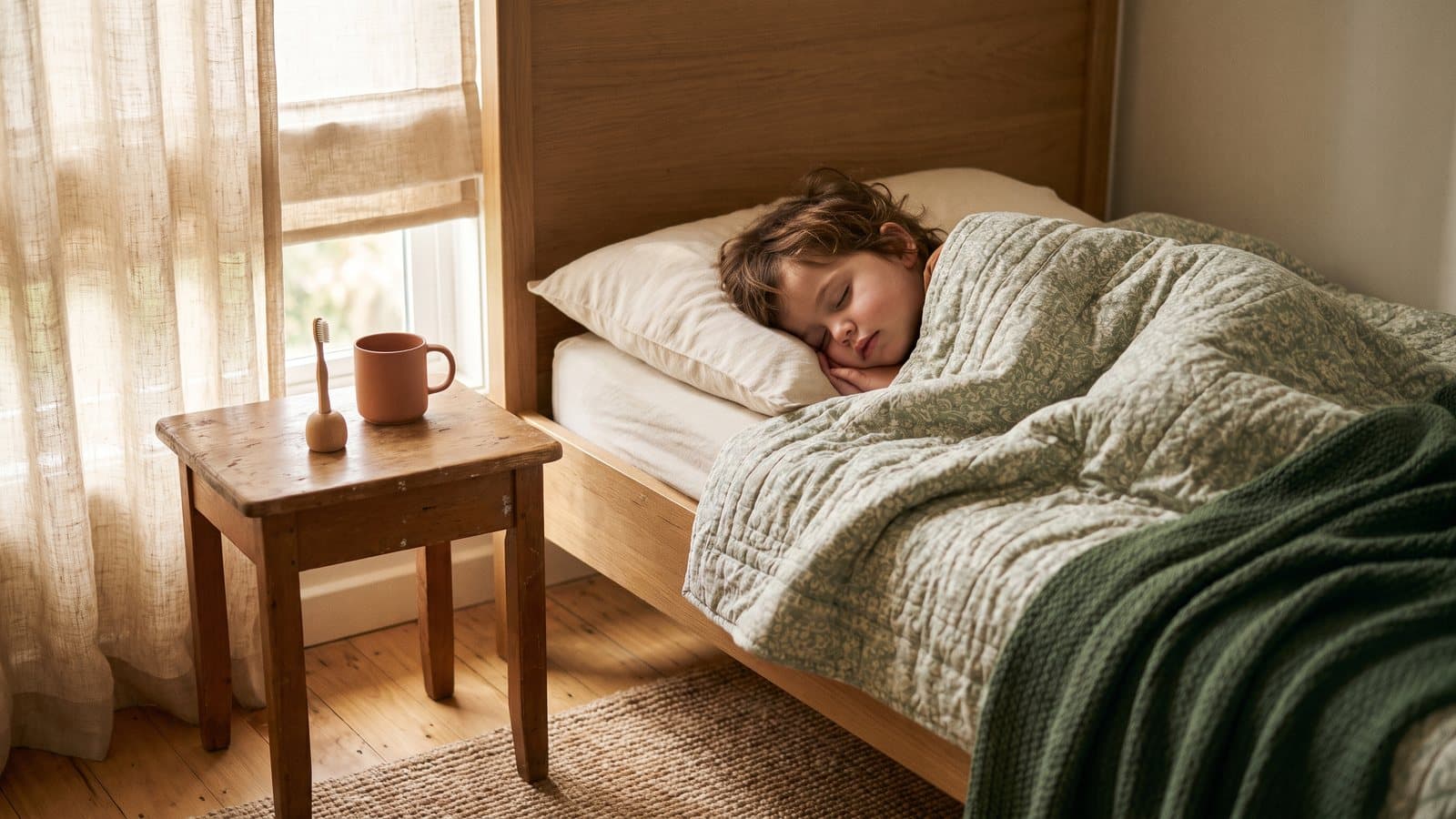
The Cavity That Caught Us Off Guard
Every February, the flyers come home from school: brush twice a day, floss, see your dentist twice a year. It is Children's Dental Health Month, a reminder most families already take seriously. So it can be startling when the checkup still turns up a new cavity, especially on the front teeth, in a child who brushes every night and rarely touches candy.
If you are wondering whether mouth breathing and cavities in kids are actually connected, and not just bad luck, you are asking a fair question. Dentists and researchers have been looking at exactly that link, and there is a real, if often overlooked, piece of the puzzle: how your child breathes at night.
Here at Austin Sleep & Airway Health, we look at the whole picture behind a child's dental health, not just the teeth in front of us. This post walks through why mouth breathing can raise cavity risk, what to watch for at home, and when a closer look makes sense.
Can Mouth Breathing Cause Cavities in Kids?
Yes, research increasingly points to mouth breathing as one contributor to cavities in kids, especially on the front teeth. A 2024 study of 257 children ages 3 to 5 in Diamantina, Brazil, published in Brazilian Oral Research, found that children who mainly breathed through the mouth were about 1.6 times as likely to have front tooth cavities as children who breathed mainly through the nose, even after accounting for how much sugar they ate.
That does not mean mouth breathing is the only reason a child gets cavities. Diet, brushing habits, and fluoride exposure matter too. But if your child breathes through the mouth regularly, especially overnight, it is worth mentioning at the next dental visit.
Why a Dry Mouth Leads to More Cavities
Saliva is not just spit. It is one of the mouth's main defenses against decay. A review of saliva's role in oral health, published in BDJ Team, describes how saliva rinses away food debris and bacteria, buffers the acids bacteria produce, and helps redeposit calcium and phosphate back into tooth enamel.
When a child breathes through the mouth for hours during sleep, air moves across the teeth and gums instead of staying in the nose. That steady airflow dries saliva out faster than the mouth can replace it. Less saliva means acid lingers longer on the enamel, particularly on the upper front teeth, which sit closest to the open airway.
This is also why mouth breathing cavities often show up in a different pattern than typical sugar driven decay: more often on the smooth front surfaces of the top teeth, rather than the back molars where plaque usually settles first.
What Makes a Child Breathe Through Their Mouth?
Kids rarely choose to mouth breathe. Most of the time, something is making nasal breathing harder.
A nose that will not stay clear
Seasonal allergies and ongoing congestion are common culprits. Central Texas cedar season and spring pollen can keep a child's nose stuffy for weeks, long enough for mouth breathing to become the easier default.
Enlarged tonsils or adenoids
Tonsils and adenoids sit at the back of the throat and nose, and in some children they grow large enough to block comfortable nasal airflow during sleep. This is one of the more common reasons a child shifts to an open mouth at night.
A habit that outlasts the cause
Sometimes the congestion clears, but the open mouth posture sticks around as a learned habit, along with a resting tongue that sits low instead of against the palate.
Signs of Mouth Breathing Worth Noticing
A few clues tend to show up together. At night, you might hear snoring, notice an open mouth during sleep, or see restless, tossing sleep. If you have already been listening for snoring at night, mouth breathing often shows up alongside it.
In the morning, dry or cracked lips, a raspy voice, or bad breath even after brushing can be signs the mouth stayed open for hours. During the day, watch for lips that rest parted with the jaw slightly dropped. None of these signs alone confirms anything, but together they paint a picture worth bringing to a visit.
What You Can Do Now: Track What You Are Seeing
You do not need a diagnosis to start paying attention. For a week or two, jot down which nights you notice mouth breathing or snoring, whether your child wakes with dry lips, and whether the pattern changes with allergy season or a cold.
At brushing time, take a quick look at the back of the top front teeth and along the gum line for new white or brown spots, which can appear before a cavity fully forms. A phone photo every few weeks, in similar light, makes changes easier to spot over time.
Bring this log, along with your child's usual brushing routine, to the next cleaning. It gives your dentist, or Dr. Culotta, a fuller picture than a single short appointment ever could on its own.
When Mouth Breathing and Cavities Are Worth an Evaluation
Occasional mouth breathing during a bad cold usually clears up on its own. It is worth scheduling a closer look when mouth breathing happens most nights for several weeks, when your child snores regularly, or when new cavities keep appearing on the front teeth despite consistent brushing.
It is also worth mentioning to your pediatrician or an ENT if mouth breathing comes with frequent congestion or visible tonsil swelling, since only a physician can evaluate the airway itself, sometimes with a sleep study. Our educational sleep and breathing screening for ages 6 to 12 can help you organize what you have noticed before that visit.
How Austin Sleep & Airway Health Helps With Mouth Breathing and Cavities in Kids
Dr. Kacie Culotta, DMD, a Diplomate of the American Board of Dental Sleep Medicine, looks at cavities and breathing together rather than as separate conversations. An airway focused exam checks tongue mobility and resting posture, palate width, tonsil size, jaw position, and whether your child breathes mainly through the nose or the mouth.
When it is appropriate, our in-house 3D CBCT airway imaging gives Dr. Culotta an awake, upright view of airway shape and volume, including the tonsils, adenoids, nasal passages, and jaw position, in about 45 seconds. It is not a sleep study and does not diagnose sleep apnea, but it can help explain why a child's mouth stays open at night.
From there, we coordinate with your child's pediatrician, ENT, and orthodontist, and with the independent myofunctional therapists who work on-site in our Myofunctional Collaborative Space, since retraining a resting tongue and lip posture is often part of supporting nasal breathing over time. As Dr. Culotta puts it, "Positive change is possible at any age. Awareness is the first step."
Frequently Asked Questions
Can mouth breathing really cause cavities in kids?
Yes, research has linked mouth breathing to a higher rate of cavities in children, especially on the top front teeth. A 2024 study of preschoolers in Brazil found mouth breathers had notably more front tooth decay than nasal breathers, even after accounting for sugar intake.
Why do mouth breathers get cavities on their front teeth specifically?
The top front teeth sit closest to an open mouth, so they dry out fastest when saliva cannot coat them evenly. Saliva normally rinses away bacteria and buffers acid, and without it, acid stays on the enamel longer, right where the airflow hits hardest.
What causes a child to breathe through their mouth instead of their nose?
Most children mouth breathe because something is blocking comfortable nasal airflow, such as allergies, a cold, or enlarged tonsils and adenoids. Sometimes the congestion clears but the open mouth habit and low tongue posture stick around anyway.
Will fixing mouth breathing stop my child's cavities?
Addressing mouth breathing can help support a healthier mouth environment, but it is unlikely to be the only factor behind a child's cavities. Diet, brushing habits, and fluoride exposure still matter, so most children benefit from working on all of it together.
How can I tell if my child is a mouth breather at night?
Watch for snoring, an open mouth during sleep, restless tossing, or dry, cracked lips and morning breath even after a good brushing routine. A short phone video or a few nights of notes can help you describe the pattern clearly at a visit.
At what age should I have my child's mouth breathing checked?
There is no single right age, but many parents start asking once mouth breathing, snoring, or new cavities become a regular pattern rather than an occasional cold symptom. Waiting rarely helps, and an evaluation can happen at any age once you notice a consistent pattern.
Where can I get my child's mouth breathing and cavities evaluated in Austin?
Austin Sleep & Airway Health offers airway focused dental evaluations for kids and teens at 1701 Simond Ave, Suite 107A, in Austin's Mueller area. Call (512) 900-9715 to schedule, and we are glad to coordinate with your child's pediatrician, dentist, or ENT.
A Good Time to Take a Closer Look
Since February is already built around a reminder to think about dental health, it is a natural time to also think about how your child breathes at night. If mouth breathing, snoring, or new front tooth cavities have you wondering what is behind them, an airway focused dental evaluation is a calm next step, and Dr. Culotta and our team are glad to help you sort out what you are seeing.
By Austin Sleep & Airway Health
This article is for general education. It is not a diagnosis and does not replace an evaluation with a qualified provider.
Dentistry that looks at how you breathe
See how airway-focused dental care for kids and adults connects jaw growth, tongue posture, and nasal breathing.
Keep Reading
Related articles

Kids & Teens
Why Is My Teenager Always Tired?
If your teenager is always tired despite sleeping in on weekends, here is what is typical teen sleep biology and when airway signs deserve a look.
Read more7 min read
Kids & Teens
Thumb Sucking and Teeth: What Summer Break Reveals
Thumb sucking and teeth: how a habit that lingers past toddler years can shape a child's bite and breathing, plus what to try this summer break.
Read more7 min read
Kids & Teens
Bedwetting and Sleep Apnea: Could Breathing Be a Factor?
Bedwetting and sleep apnea can be connected in some children. Learn common causes, how breathing may factor in, and when a closer look helps.
Read more7 min read
Free Sleep Apnea Quiz
Do You Have Sleep Apnea? Find Out Now
Snoring, fatigue, and restless nights could be signs of sleep apnea, a condition that affects your health more than you might realize. Take our quick, easy Sleep Apnea Quiz to uncover potential risk factors and determine if it’s time to seek expert care. In just a few minutes, you’ll gain valuable insights into your sleep health and take the first step toward better breathing, restful nights, and a healthier life. Don’t wait. Your journey to better sleep starts here!