Sleep Apnea & Snoring
Did Your Smartwatch Flag Sleep Apnea? What to Do Next
Published 7 min read
That Morning Notification on Your Wrist
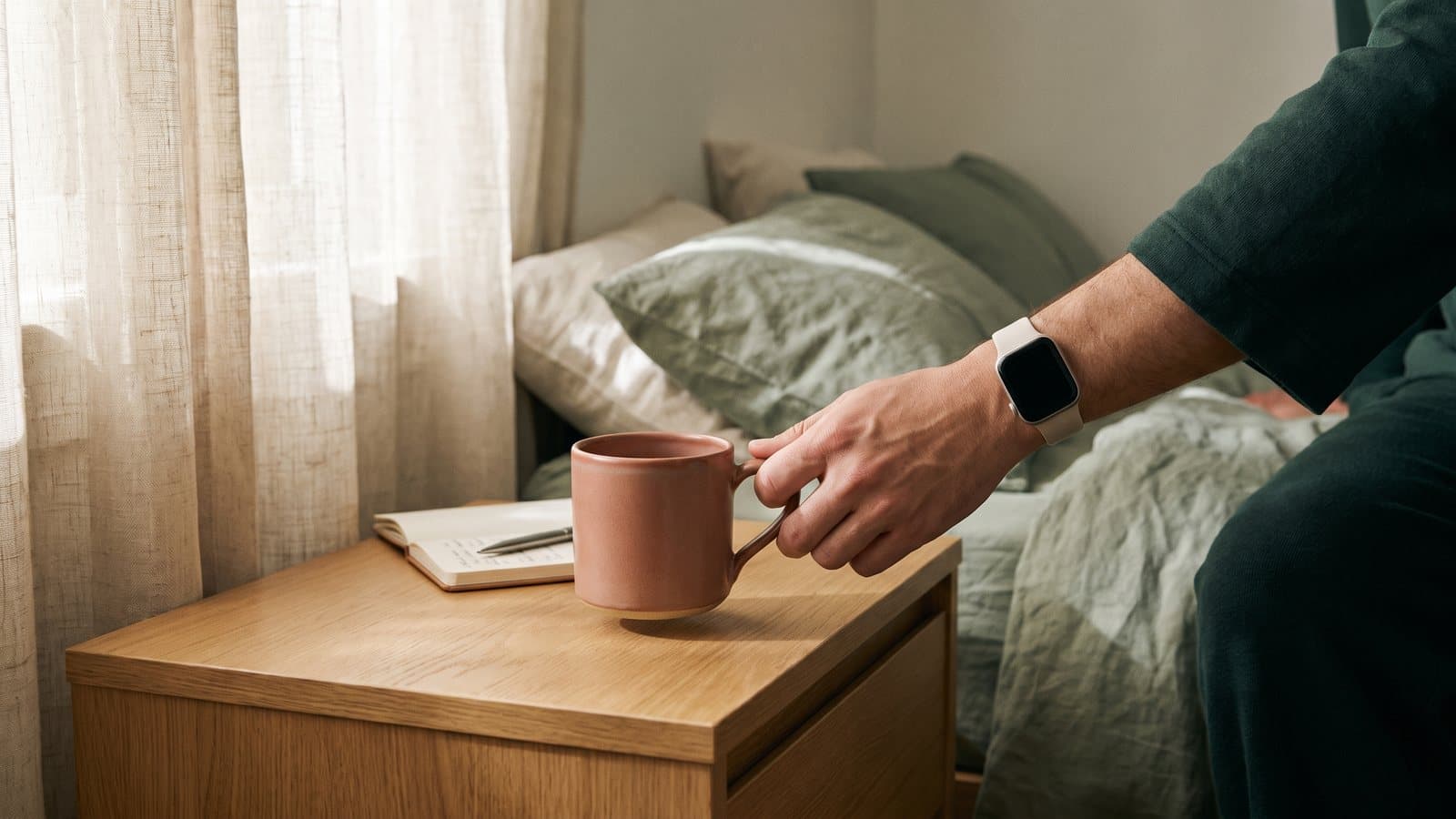
You pour your coffee, glance at your phone, and there it is: a health notification saying your watch noticed signs of possible sleep apnea. You thought you slept fine. Or maybe your partner has mentioned your snoring for a year, and now your wrist agrees.
September tends to be new-watch season, and it was last September that Apple introduced sleep apnea notifications for its watch. Samsung's Galaxy Watch gained a similar feature in 2024. More people are now getting a smartwatch sleep apnea alert and wondering how seriously to take it.
At Austin Sleep & Airway Health, we see these alerts as a helpful nudge, not a verdict. Below, you will find what the notification means, what it can miss, what to track, and the calm next steps toward a real answer.
What Does a Smartwatch Sleep Apnea Alert Actually Mean?
The short answer: your watch noticed a repeated pattern worth asking a physician about. A notification is not a diagnosis. Only a physician can diagnose sleep apnea, through a home sleep test or an overnight study in a sleep lab.
How the Apple Watch feature works
Apple's feature uses the watch's accelerometer to pick up tiny wrist movements linked to interruptions in normal breathing, which Apple calls breathing disturbances. Every 30 days, the watch reviews the data (it needs at least 10 nights of wear in that window) and sends a notification when a consistent pattern suggests possible moderate to severe sleep apnea. The alert includes a PDF summary to share with a clinician. The FDA cleared the feature in September 2024 for adults 18 and older who have not been diagnosed with sleep apnea.
How the Samsung Galaxy Watch feature works
Samsung's feature received FDA De Novo authorization in February 2024 and reached U.S. users later that year. It is intended for adults 22 and older without a sleep apnea diagnosis, and it looks for signs of moderate to severe obstructive sleep apnea after you track two nights of more than four hours within a 10-day period.
What both companies say
Both companies state that these features are not meant to diagnose sleep apnea or replace a clinician. The American Academy of Sleep Medicine (AASM) position statement on consumer sleep technology agrees: these devices cannot diagnose sleep disorders, but they can support a better conversation with your clinician.
What the Watch Can Miss, and Why No Alert Is Not an All-Clear
Apple's own validation paper explains that the notification was deliberately tuned to keep false alarms low. The trade-off is that it can miss people who do have sleep apnea. In Apple's clinical study, the notification identified roughly two in three participants with moderate to severe sleep apnea, and it caught severe cases more often than moderate ones. It was designed to look for moderate to severe sleep apnea, not mild.
So an alert deserves a real follow-up, because the feature speaks up only when the pattern is consistent. And silence is not reassurance. Apple notes that the absence of a notification does not mean the absence of sleep apnea, and the feature does not factor in your symptoms.
If you wake up unrefreshed, someone has heard you gasp, or you keep getting elbowed for snoring, those signs count even if your watch says nothing.
What to Do After a Sleep Apnea Notification
There is no need to worry, and no reason to wait. Here is a calm, practical sequence.
Save the report and keep wearing the watch
On an Apple Watch, export the PDF from the Health app. On a Galaxy Watch, a screenshot of your result works. Keep wearing the watch as usual, since a longer view helps more than a single night.
Track what the watch cannot see
Your watch measures movement, not how you feel. For about two weeks before your appointment, jot down a few notes each morning:
- When you went to bed, when you woke, and how rested you felt
- Whether you woke with a dry mouth or a headache
- Nights you got up to use the bathroom
- Anything your partner noticed, such as snoring, pauses, gasping, or restless sleep
- Evenings with alcohol, a hard workout, a late meal, or a stuffy nose
The National Heart, Lung, and Blood Institute notes that sleep diary details can help your provider.
Book a visit with your physician
Start with your primary care provider or a sleep physician, and bring the watch report, your log, and your questions. The AASM's diagnostic guideline pairs testing with a comprehensive sleep evaluation, so expect questions about symptoms, health history, and family history.
Ask about a sleep study
If your physician agrees that testing makes sense, the next step is a sleep study. Many adults can do a home sleep test, while others are better served by an overnight lab study. Our guide to home sleep tests versus in-lab sleep studies walks through the differences so you know what to expect.
When It's Worth an Evaluation, Alert or Not
Sometimes the watch speaks up first. Other times you already had a hunch. Either way, an evaluation is worth scheduling if a few of these sound familiar: loud snoring most nights, breathing that seems to stop and start, gasping for air, daytime sleepiness, headaches or a dry mouth, or waking often during the night to urinate. The National Heart, Lung, and Blood Institute lists these among the common signs of sleep apnea, and none of them requires a watch to notice.
Snoring on its own can be common, so it helps to know the differences. Our post on telling snoring apart from sleep apnea covers what each tends to look like.
How Austin Sleep & Airway Health Helps After a Smartwatch Alert
Your physician leads the diagnosis. We are the airway partner on your team, looking closely at the structures that shape how you breathe at night and helping connect the dots.
Dr. Culotta is a Diplomate of the American Board of Dental Sleep Medicine, with over a decade of experience as a family dentist, lactation counselor, and myofunctional specialist. Our airway-focused exam looks at tongue mobility and resting posture, oral ties, palate width, your bite and jaw joints, tonsil size, nasal versus mouth breathing, and signs of clenching or grinding, along with a detailed sleep and health history.
We also offer an in-house 3D CBCT airway scan, a quick, low-radiation image that takes about 45 seconds. It is an awake, upright snapshot of your airway, not a sleep study, so it complements testing rather than replacing it.
We can help coordinate sleep testing and work directly with your sleep physician. If you are diagnosed with obstructive sleep apnea, custom oral appliance therapy is one option to discuss alongside CPAP, an effective, well-established first-line treatment. Some people use both. When the nose, tonsils, or tongue need another specialist, we collaborate with ENTs and myofunctional therapists.
As Dr. Culotta puts it, "Positive change is possible at any age. Awareness is the first step." Your watch may have just handed you that first step.
Frequently Asked Questions
Can a smartwatch diagnose sleep apnea?
No, a smartwatch cannot diagnose sleep apnea; it can only flag a pattern worth discussing with a physician, who diagnoses it through a sleep study. AASM guidance says prediction tools should not replace a home sleep test or in-lab study.
Should I get a sleep study after a sleep apnea notification?
A notification is a good reason to see your physician, who can decide whether a home sleep test or an in-lab study fits your health history. Bring the watch report and a short sleep log.
Can alcohol or a hard workout change my breathing disturbance readings?
Yes, Apple notes that alcohol, exercise, and changes in medications or body weight can influence breathing disturbance levels over time. That is why the notification looks for a pattern across weeks, not one evening out.
Can I keep using the feature after I am diagnosed with sleep apnea?
These notification features are designed for adults who have not been diagnosed, so once you have a diagnosis, your sleep physician's follow-up becomes the better guide. With an oral appliance, a follow-up sleep test coordinated with your physician confirms how well it is working.
Can a dentist help with sleep apnea?
A dentist cannot diagnose sleep apnea, but a qualified dental sleep medicine dentist can evaluate your airway and provide oral appliance therapy once a physician has made the diagnosis. Joint AASM and AADSM guidance favors a custom, adjustable appliance made by a qualified dentist.
Where can I get help after a smartwatch sleep apnea alert in Austin?
Austin Sleep & Airway Health, in the Mueller area at 1701 Simond Ave, Suite 107A, offers airway evaluations and helps coordinate sleep testing with your physician. Call (512) 900-9715 or email hello@austinsleephealth.com to get started.
Turn Your Watch's Nudge Into a Real Answer
If your watch flagged something, or you suspect it missed something, a few quiet minutes with our adult sleep apnea screening can help you organize your symptoms before you talk with your physician. It is educational, not a diagnosis, and a friendly place to start. When you are ready, we would be glad to look at your airway with you and plan your next step together.
By Austin Sleep & Airway Health
This article is for general education. It is not a diagnosis and does not replace an evaluation with a qualified provider.
Wondering whether a sleep evaluation is right for you?
Take our quick, educational adult sleep screening to better understand your risk factors and what to bring to a visit.
Keep Reading
Related articles

Sleep Apnea & Snoring
Acid Reflux at Night and Sleep Apnea: How They Connect
Acid reflux and sleep apnea often overlap at night. Here is what research says about the connection, what to notice, and when to get it checked.
Read more7 min read
Sleep Apnea & Snoring
Waking Up to Pee at Night: A Sleep Apnea Connection?
Waking up to pee at night more than once? It could be summer hydration, or your airway. Here is what is normal and worth mentioning at a visit.
Read more7 min read
Sleep Apnea & Snoring
Waking Up With a Headache? What It Could Mean
Waking up with a headache in Austin's summer heat? See how dehydration, jaw clenching, and sleep apnea can each play a role, and what to track.
Read more7 min read