Evaluation & Treatment
Home Sleep Test vs. In-Lab Sleep Study: Which Fits You?
Published 7 min read
The Fall Appointment You Put Off All Summer
It is the week after Labor Day, and the calendar is filling back up. Somewhere between school forms and work deadlines sits the referral your doctor mentioned back in June: a sleep study. Now the scheduler has a question: would you prefer a home sleep test in your own bed, or a night at a sleep center?
Both are real sleep studies, but they are not interchangeable. The right choice depends on your symptoms, your health history, and what your physician needs to see.
At Austin Sleep & Airway Health, we help adults coordinate sleep testing with their physicians and understand where the airway fits in. This guide covers what each test measures, who each one suits, what to do if a home test comes back normal but you still feel worn out, and how to prepare so your night counts.
Home Sleep Test vs. In-Lab Sleep Study: What Is the Difference?
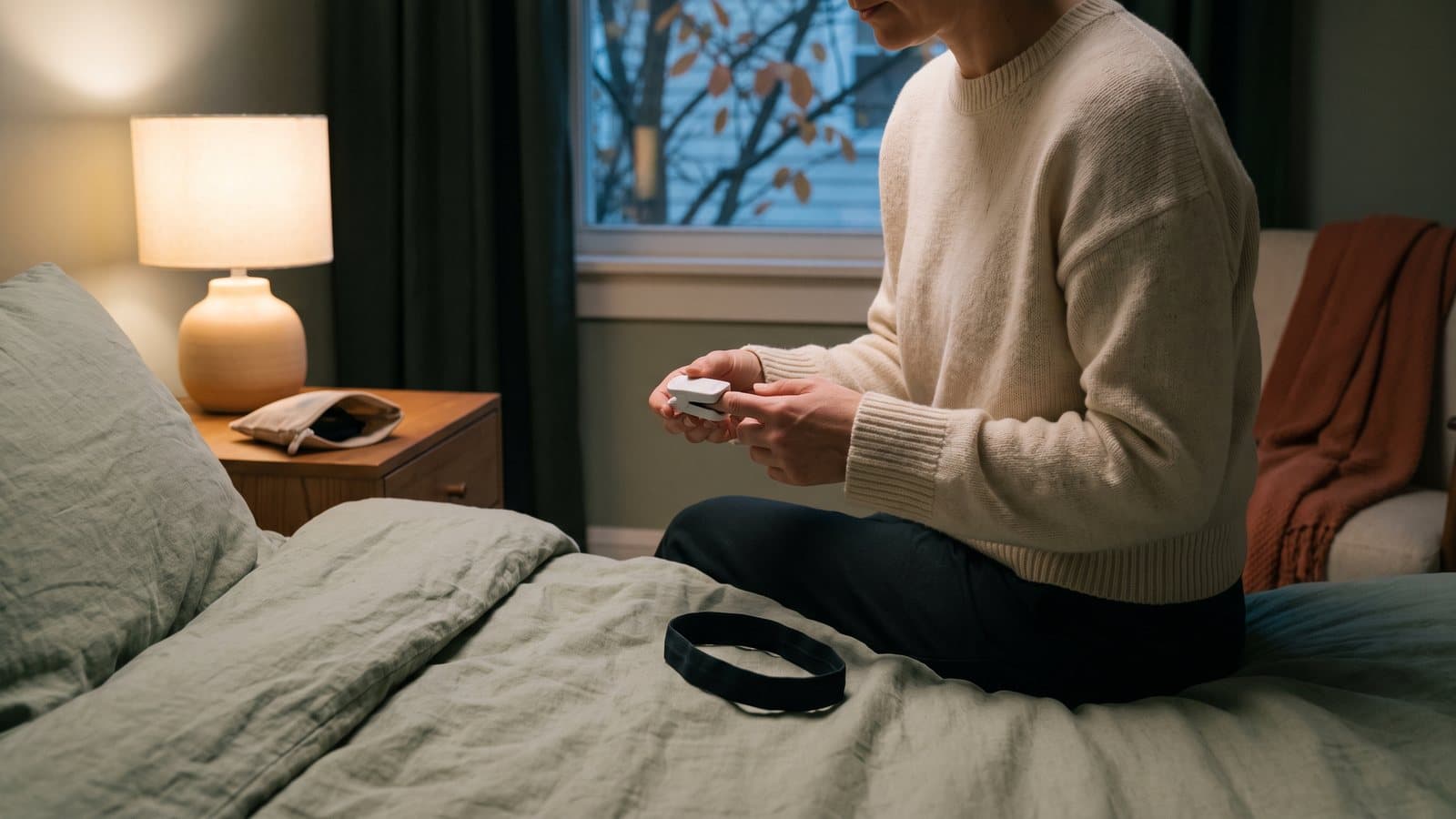
A home sleep test (often called a home sleep apnea test) is a small, portable kit you wear for a night at home. MedlinePlus notes that it uses fewer sensors than a lab study and tracks breathing, heart rate, blood oxygen, and snoring. Harvard Health describes the usual setup: a belt around your midsection, a finger clip for oxygen, and an airflow sensor at the nose.
An in-lab sleep study, called polysomnography, takes place in a private bedroom at a sleep center while a technologist monitors you. Along with breathing and oxygen, it records brain waves, eye movements, muscle activity, and leg movements, so it can show which stage of sleep you were in when your breathing changed.
The detail that matters most
Most home devices cannot tell when you are actually asleep. The American Academy of Sleep Medicine (AASM) explains in its 2017 diagnostic guideline that home tests count breathing events across the whole recording time rather than true sleep time, which can underestimate how often those events happen. A lab study measures sleep directly, and when the pattern is clear early, the team can sometimes start positive airway pressure (CPAP) the same night, known as a split-night study.
Is a Home Sleep Test Accurate Enough?
For the right person, yes. The AASM guideline supports either a home test with a technically adequate device or an in-lab study for uncomplicated adults whose symptoms point to a higher risk of moderate to severe obstructive sleep apnea. The AASM patient guide describes that as feeling very sleepy during the day plus at least two of these: routine loud snoring, witnessed gasping or breath holding during sleep, or high blood pressure.
The same guide lists home tests as less expensive, more convenient, and more comfortable. Many people sleep more like themselves in their own bed. The trade-off is detail: the guide notes that milder sleep apnea is diagnosed most accurately in a sleep center, and that home tests are more likely to be inaccurate when the equipment is not set up correctly.
Who Should Choose an In-Lab Sleep Study Instead?
The AASM recommends an in-lab study rather than a home test for adults with significant heart or lung disease, neuromuscular conditions that may affect the breathing muscles, a history of stroke, severe insomnia, suspected shallow breathing during sleep (hypoventilation), or certain long-term medications your physician will ask about. A lab study also fits better when your physician is looking for a different sleep disorder, such as leg movements during sleep, since a home kit is designed to look for obstructive sleep apnea.
In a 2017 position statement, the AASM advised against using home tests to diagnose obstructive sleep apnea in children, so kids are typically studied overnight in a sleep center.
My Home Sleep Test Was Normal, but I Am Still Tired. Now What?
This worry comes up often in sleep forums. A normal home result is useful, but it is not always the final word. The AASM recommends that when a single home test is negative, inconclusive, or technically inadequate, an in-lab study be performed if sleep apnea is still suspected.
There are ordinary reasons a home test can read lighter than expected. A sensor may slip. Hours spent awake still count as recording time. You may have slept mostly on your side. None of that means you did anything wrong.
Daytime fatigue also has many possible causes, and your physician is the right person to sort through them. What you can do is share your full picture, including whether your symptoms seem to match the result.
What You Can Do Now to Prepare for Either Test
Before your appointment, jot down a week of bedtimes, wake times, and how rested you felt. Ask a bed partner what they have noticed, such as loud snoring, pauses, or gasping. Note daytime clues like morning headaches, a dry mouth on waking, or dozing during quiet moments, and bring a current list of your health conditions and prescriptions for your physician to review.
On test day, MedlinePlus suggests skipping naps, avoiding caffeine and alcohol in the afternoon and evening, and leaving off nail polish and cosmetics that can interfere with the sensors. Keep your usual bedtime routine. For a home test, read the instructions early and attach the sensors without rushing. For a lab night, Harvard Health notes that you can wear your own nightclothes and bring your own pillow.
Nervous about sleeping poorly? The Sleep Foundation notes that trouble sleeping during a study is common, and that a sampling of sleep, rather than a perfect night, is usually enough to be useful.
When It Is Worth an Evaluation
Loud, regular snoring is worth a look, especially alongside pauses or gasps a partner notices, waking unrefreshed after a full night, or trouble staying alert in the afternoon. If you are not sure whether your snoring is just noise, our guide to snoring vs. sleep apnea walks through the difference.
An evaluation also makes sense if a home test came back normal and you still do not feel like yourself, or if you were diagnosed years ago and want to revisit treatment options. Awareness is the first step, and it is never too late to start.
How Austin Sleep & Airway Health Helps Before and After Your Sleep Test
Only a physician can diagnose sleep apnea, through a sleep study. Our role is to be the team member who looks closely at the airway and connects the dots. We can help coordinate testing and work alongside your sleep physician, so your test fits into a clear plan.
Dr. Culotta, a Diplomate of the American Board of Dental Sleep Medicine, starts with an airway-focused exam: tongue mobility and resting posture, oral ties, palate width, bite, jaw joints, tonsil size, and nasal versus mouth breathing. Our in-house 3D CBCT airway imaging takes about 45 seconds with low radiation exposure and shows airway shape, volume, nasal passages, and jaw position. It is an awake, upright snapshot, not a sleep study, so it adds context rather than replacing testing.
If a physician diagnoses obstructive sleep apnea, CPAP is an effective, well-established first-line treatment, and custom oral appliance therapy is another option for some people. When an appliance is part of your plan, we coordinate a follow-up sleep test with your physician to confirm how well it is working, and we collaborate with ENTs and myofunctional therapists when the nose, tonsils, or oral muscles are part of the story.
Frequently Asked Questions
Can a home sleep test miss sleep apnea?
Yes, a home sleep test can sometimes underestimate or miss sleep apnea, especially milder cases, because most devices cannot measure actual sleep time. The AASM recommends an in-lab study when a home test is negative or inconclusive and suspicion remains.
What if I can't sleep during my sleep study?
Trouble sleeping during testing is common, and a sleep study usually does not need a perfect night of sleep to give your physician useful information. If too little sleep is recorded, the study may be repeated.
Do I need a doctor's order for a home sleep test?
Yes, the AASM's position is that a home sleep apnea test must be ordered by a physician after an evaluation and interpreted by a qualified sleep physician. Automated scoring alone is not considered enough for a diagnosis.
Can children use a home sleep test?
The AASM's 2017 position statement advises against home sleep tests for diagnosing obstructive sleep apnea in children, so kids are usually studied overnight in a sleep center. Your pediatrician can guide that referral.
Can a dental CBCT scan replace a sleep study?
No, a CBCT scan shows the structure of your airway while you are awake and upright, but it cannot measure breathing during sleep or diagnose sleep apnea. It adds helpful context alongside a physician's sleep study.
Where can I get help arranging a home sleep test in Austin?
Austin Sleep & Airway Health, in the Mueller area of Austin, can help coordinate sleep testing with your physician and pair it with an airway-focused exam. Call us at (512) 900-9715 to get started.
Start With a Few Simple Questions
If you are weighing a home sleep test against a night in the lab, or still feel tired after a normal result, a calm first step is our adult sleep and airway screening. It is educational rather than diagnostic, and it can help you organize what to share with your physician or bring to a visit with Dr. Culotta.
By Austin Sleep & Airway Health
This article is for general education. It is not a diagnosis and does not replace an evaluation with a qualified provider.
Wondering whether a sleep evaluation is right for you?
Take our quick, educational adult sleep screening to better understand your risk factors and what to bring to a visit.
Keep Reading
Related articles
Evaluation & Treatment
Sleep Study Results Explained: AHI, Oxygen, and Next Steps
Your sleep study results are in. Here is what AHI, RDI, ODI, and your oxygen numbers actually mean, and what to ask your physician about next steps.
Read more7 min read
Evaluation & Treatment
Night Guard vs. Sleep Apnea Appliance: What's the Difference?
See how a standard night guard differs from a sleep apnea appliance, what the research really says, and when an evaluation helps you choose right.
Read more7 min read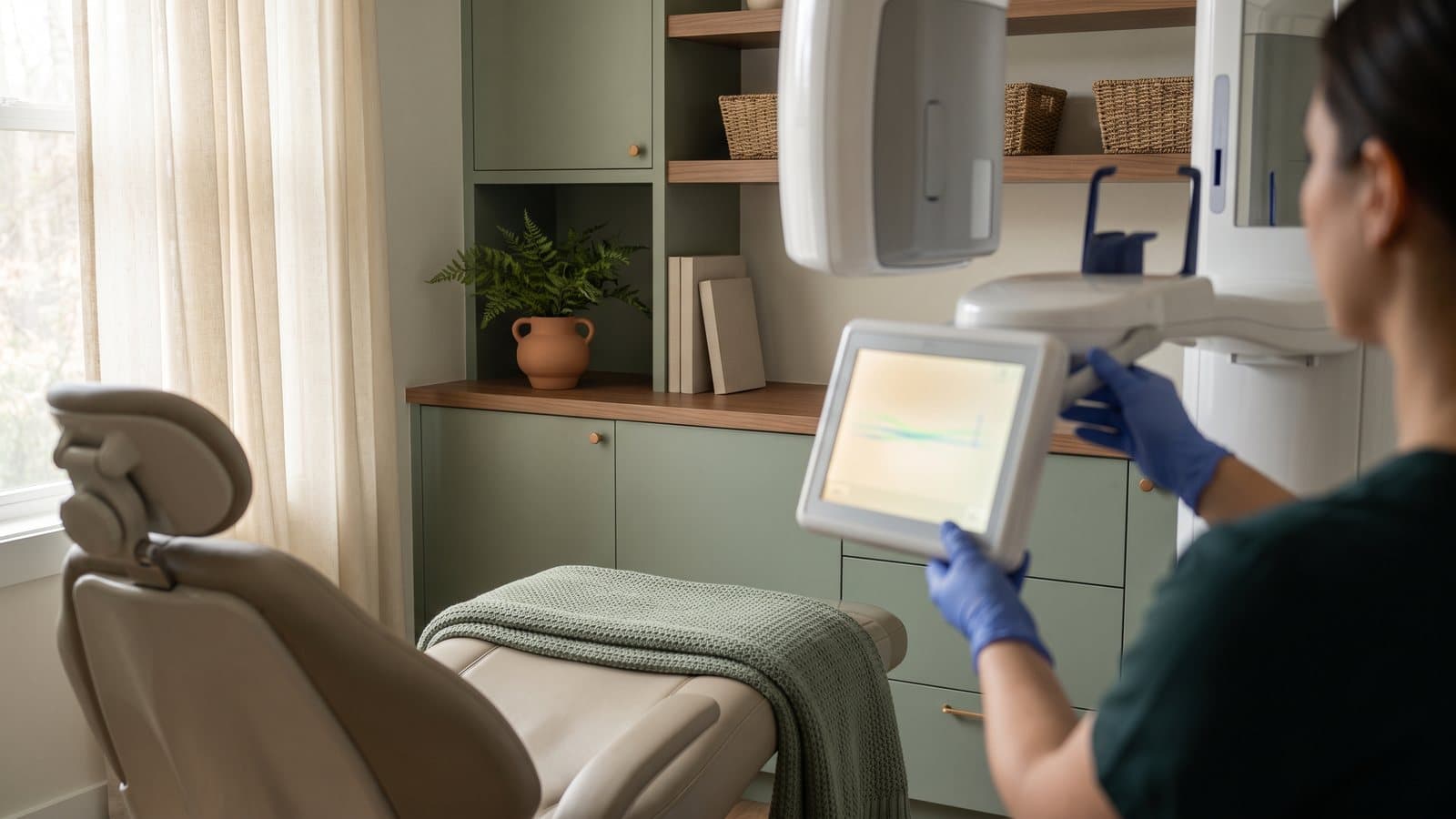
Evaluation & Treatment
Is a CBCT Scan Safe? Radiation and Airway Imaging Explained
See how much radiation a CBCT scan uses, how the ALARA principle keeps every scan low, and what Dr. Culotta looks for during your airway evaluation.
Read more7 min read