Evaluation & Treatment
Sleep Study Results Explained: AHI, Oxygen, and Next Steps
Published 7 min read

Waiting for Your Sleep Study Results to Make Sense
The portal notification arrives on a weekday afternoon: your sleep study results are ready to view. You open it expecting a clear answer and instead find a page of abbreviations, a jagged chart, and a handful of numbers you have never seen before. AHI. RDI. ODI. A figure next to the word oxygen.
Fall tends to be when this happens, as your calendar fills back up with the appointments you put off over the summer, and this one feels like it matters more than most.
At Austin Sleep & Airway Health, we help patients understand what a sleep study measures, what the numbers on the report mean, and what questions to bring to the physician who ordered the test. This guide walks through AHI, RDI, ODI, and oxygen levels, along with what typically happens next.
How to Read Your Sleep Study Results
A sleep study, whether an in-lab polysomnogram or a home sleep apnea test, records how you breathe through the night. MedlinePlus explains that the equipment tracks breathing rate, airflow, and blood oxygen level, and a sleep technologist or automated system reviews the recording afterward.
Two events show up again and again on the report. An apnea is a pause in breathing lasting at least ten seconds. A hypopnea is shallow breathing, not a full stop, also lasting at least ten seconds and paired with a drop in oxygen. Your report adds these up and divides by your hours of sleep, and that average is the apnea hypopnea index, or AHI.
The AHI is the number most people notice first. The American Academy of Sleep Medicine notes that AHI alone does not capture everything about a night of breathing, which is why your report includes other measures too.
What Do RDI and ODI Add to the Picture?
The respiratory disturbance index, or RDI, builds on the AHI by also counting brief arousals tied to breathing effort that do not quite meet the definition of a hypopnea. Your RDI can run a little higher than your AHI on the same report, and specialists sometimes reference it when symptoms suggest disrupted sleep even with a near normal AHI.
The oxygen desaturation index, or ODI, is a different lens. Research published in a peer reviewed sleep medicine journal on PubMed Central describes it as the number of times per hour your blood oxygen dropped by a meaningful amount and held there for at least ten seconds. Where AHI counts breathing events, ODI counts what those events did to your oxygen, and the two usually track together but not always exactly.
What Your Oxygen Numbers and Oxygen Nadir Mean
Your report also lists an oxygen nadir, the single lowest oxygen reading recorded during the entire night. It is a snapshot of your worst moment, not an average.
A brief, isolated dip is a different story than oxygen that repeatedly falls and stays low. That is part of why your physician reviews the oxygen nadir alongside the ODI and the AHI, rather than any single figure in isolation. MedlinePlus notes that some oxygen variation during sleep is normal, which is why interpreting this number takes training and the full context of your report.
Mild, Moderate, or Severe: How AASM Severity Ranges Work
If your report mentions obstructive sleep apnea, it likely uses one of three severity words. The American Academy of Sleep Medicine classifies adult obstructive sleep apnea by AHI as mild from 5 to 15 events per hour, moderate from 15 to 30 events per hour, and severe at 30 or more events per hour. An AHI under 5 falls in the normal range.
These labels describe a pattern from one night, scored against a standard scale. The AASM has also pointed out that specialists increasingly weigh factors alongside AHI, including how low oxygen dropped and how long it stayed there. Two people with the same AHI can have very different symptoms, which is why these ranges are not something to interpret on your own. Your physician reviews your full study, oxygen data, symptoms, and health history together before discussing what it means for you.
What You Can Do Now: Questions and Notes to Bring to Your Follow-Up
Before your follow-up appointment, write down what you want answered rather than trying to remember it in the moment. A short list works well:
- Your AHI, RDI, and oxygen nadir, and how each compares to a normal range
- Whether your report notes your sleep position or which sleep stage events happened in
- What your physician recommends as a first step, and what the alternatives are
It also helps to note how you have been feeling, such as morning headaches, a dry mouth on waking, or anything a bed partner has mentioned about snoring or breathing pauses. Bring a current list of your health conditions and medications, since your physician will want the full picture.
When It Is Worth an Evaluation
If you already have sleep study results and are not sure what they mean, that alone is worth an evaluation. It is also worth a look if you want to understand where the airway fits in, or if you are weighing options beyond or alongside CPAP.
The same is true if a home test came back borderline, or your physician suggested a closer look at your airway. None of this means something is wrong, only that you are gathering the full picture.
How Austin Sleep & Airway Health Helps After Your Sleep Study Results
Only a physician diagnoses obstructive sleep apnea, through a sleep study. Our role starts after that report exists, helping patients understand it while we look closely at the airway to see what else might be part of the story.
Dr. Culotta begins with an airway focused exam: tongue mobility and resting posture, oral ties, palate width, bite, jaw joints, tonsil size, and whether you tend to breathe through your nose or your mouth. Our in-house 3D CBCT airway imaging adds a look at airway shape, volume, and jaw position while you are awake and upright. It does not diagnose anything on its own, but it can add context to a conversation that started with your home sleep test or in-lab study.
CPAP is an effective, well established first line treatment, and for many people it remains the right long term plan. Custom oral appliance therapy is another option, sometimes used alongside CPAP rather than instead of it. If you have been struggling with CPAP, an appliance may be worth discussing with your physician. When an appliance is part of the plan, we coordinate a follow-up sleep test to confirm how it is working, and we collaborate with sleep physicians, ENTs, and myofunctional therapists along the way. Dr. Culotta notes, "Positive change is possible at any age. Awareness is the first step."
Frequently Asked Questions
What does AHI mean on a sleep study?
AHI stands for apnea hypopnea index, the average number of breathing pauses and shallow breathing events recorded per hour of sleep. Your physician uses it, alongside your oxygen data and symptoms, to describe how your breathing looked on the night of your study.
What is considered a normal AHI?
An AHI under 5 events per hour is generally considered within the normal range for adults. From there, the American Academy of Sleep Medicine describes 5 to 15 as mild, 15 to 30 as moderate, and 30 or more as severe.
What is the difference between AHI and RDI?
RDI includes everything AHI counts, plus brief breathing related arousals that do not quite meet the definition of a hypopnea, so it can run higher than AHI on the same report. Your physician may reference RDI when symptoms suggest disrupted sleep even if AHI alone looks close to normal.
What does the oxygen desaturation index on my report mean?
The oxygen desaturation index, or ODI, counts how many times per hour your blood oxygen dropped by a meaningful amount and stayed there for at least ten seconds. It is reported alongside your oxygen nadir, the single lowest reading of the night, to give your physician a fuller picture of what happened to your oxygen during sleep.
Do I need CPAP if my AHI is in the mild range?
Your physician decides your treatment plan based on your full study, symptoms, and health history, not the AHI number alone. CPAP remains an effective, well established option at any severity level, and for some people with milder results, an evaluation for other options such as oral appliance therapy is also worth having.
Can I interpret my own sleep study results without a doctor's help?
You can read the numbers, but interpreting what they mean for your health is a physician's role, since severity ranges alone do not capture your symptoms or overall health. Bringing your questions to a follow-up appointment is the most reliable way to understand your report.
Where can I get help understanding sleep study results in Austin?
Austin Sleep & Airway Health, in the Mueller area of Austin, helps patients make sense of their sleep study results and looks at how the airway fits into the picture. Call us at (512) 900-9715 or request a visit to talk through your report with our team.
Ready to Talk Through Your Results?
If you have sleep study results in hand and want help understanding them, a calm first step is to schedule a visit with our team. We will help you organize your questions and look closely at your airway alongside the physician managing your care.
By Austin Sleep & Airway Health
This article is for general education. It is not a diagnosis and does not replace an evaluation with a qualified provider.
Ready to talk it through?
Book a visit with Dr. Culotta to review your sleep, breathing, and airway, and map out a next step that fits you.
Keep Reading
Related articles
Evaluation & Treatment
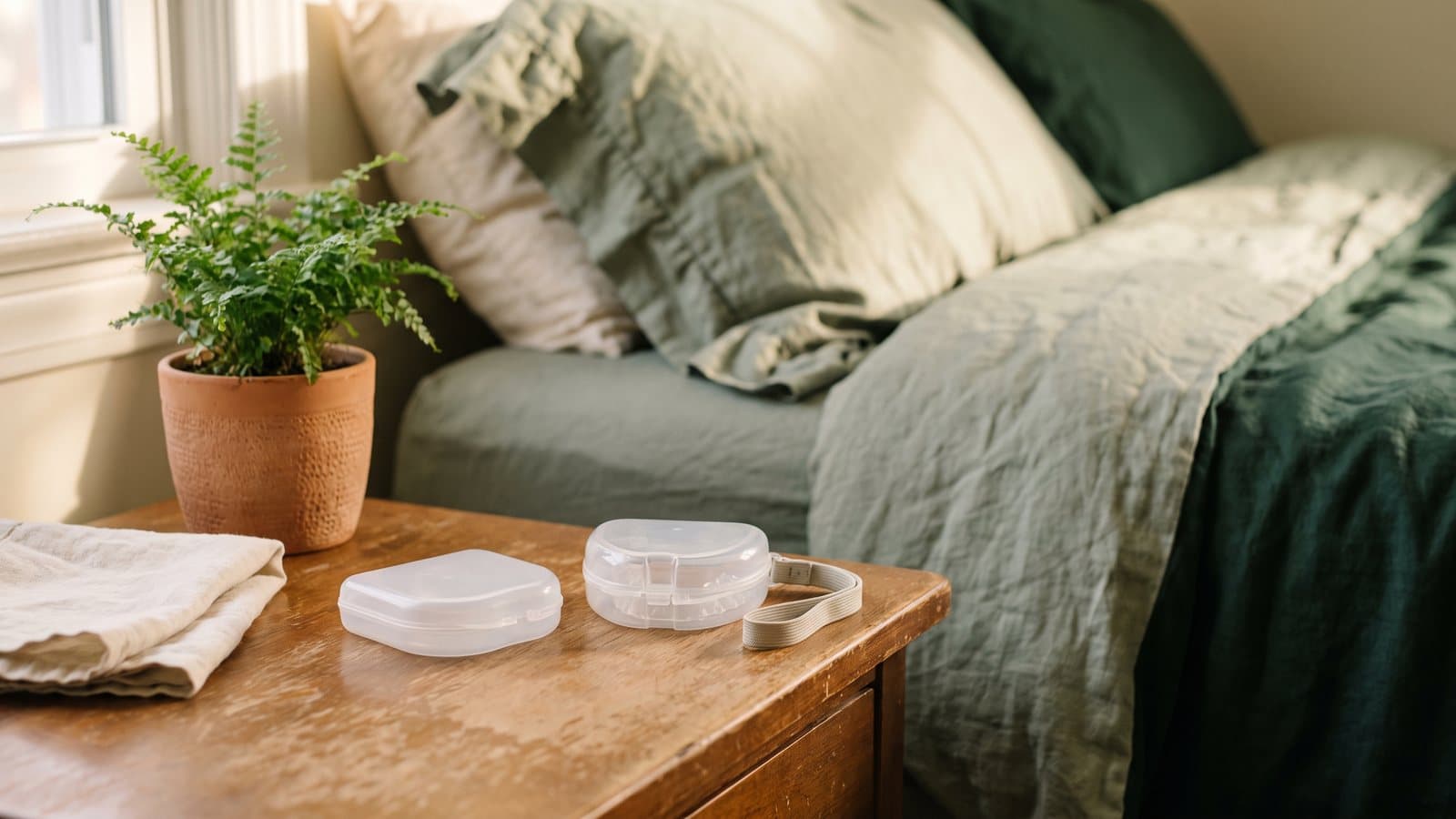
Night Guard vs. Sleep Apnea Appliance: What's the Difference?
See how a standard night guard differs from a sleep apnea appliance, what the research really says, and when an evaluation helps you choose right.
Read more7 min read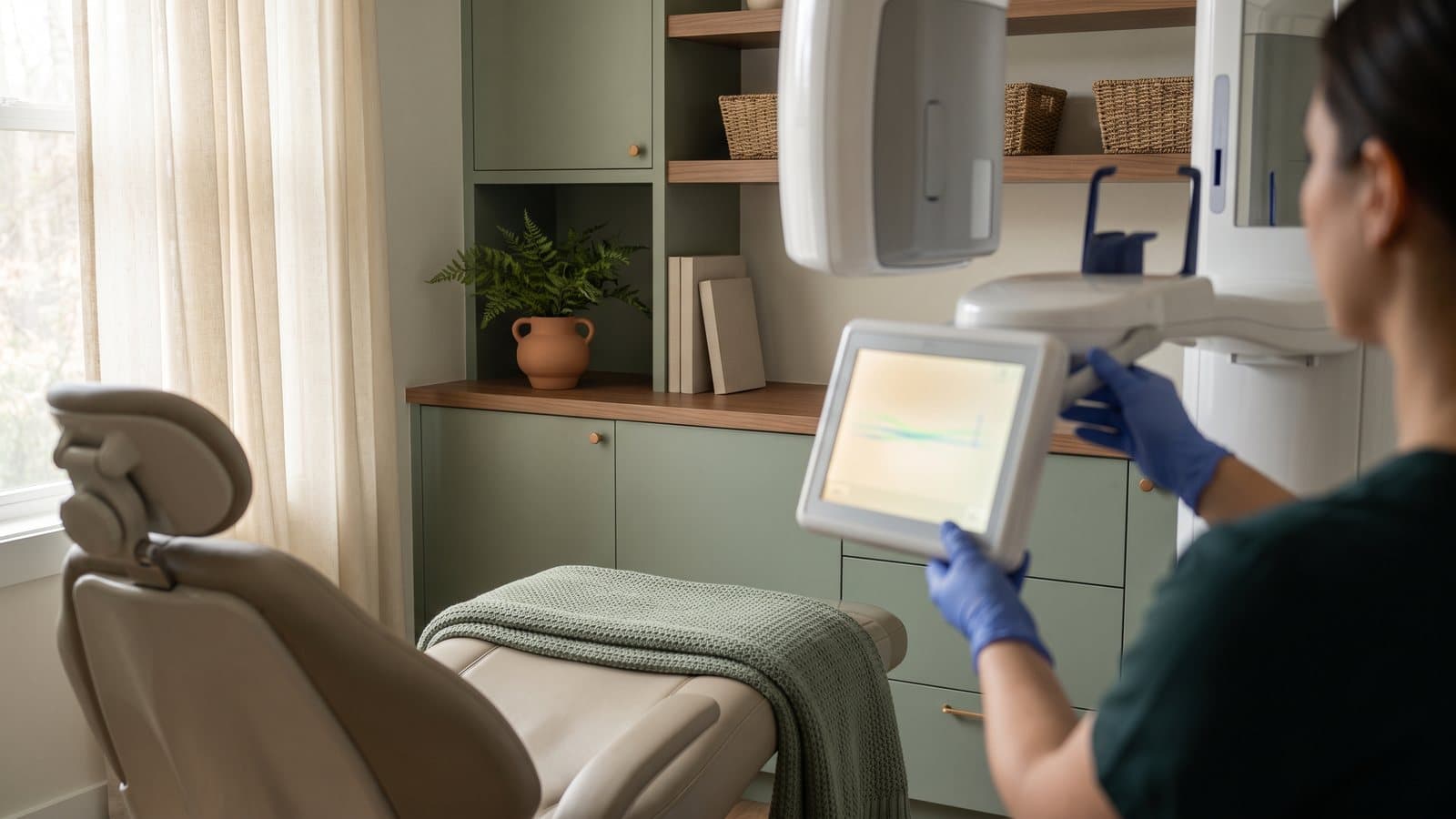
Evaluation & Treatment
Is a CBCT Scan Safe? Radiation and Airway Imaging Explained
See how much radiation a CBCT scan uses, how the ALARA principle keeps every scan low, and what Dr. Culotta looks for during your airway evaluation.
Read more7 min read
Evaluation & Treatment
Laser Snoring Treatment: What Soft Palate Tightening Involves
A calm guide to laser snoring treatment: how soft palate tightening works, what research shows, and how candidacy is decided at a consultation.
Read more7 min read
Free Sleep Apnea Quiz
Do You Have Sleep Apnea? Find Out Now
Snoring, fatigue, and restless nights could be signs of sleep apnea, a condition that affects your health more than you might realize. Take our quick, easy Sleep Apnea Quiz to uncover potential risk factors and determine if it’s time to seek expert care. In just a few minutes, you’ll gain valuable insights into your sleep health and take the first step toward better breathing, restful nights, and a healthier life. Don’t wait. Your journey to better sleep starts here!