Breathing & Airway
Deviated Septum and Sleep Apnea: When Your Nose Affects Breathing
Published 7 min read
When One Nostril Never Fully Opens
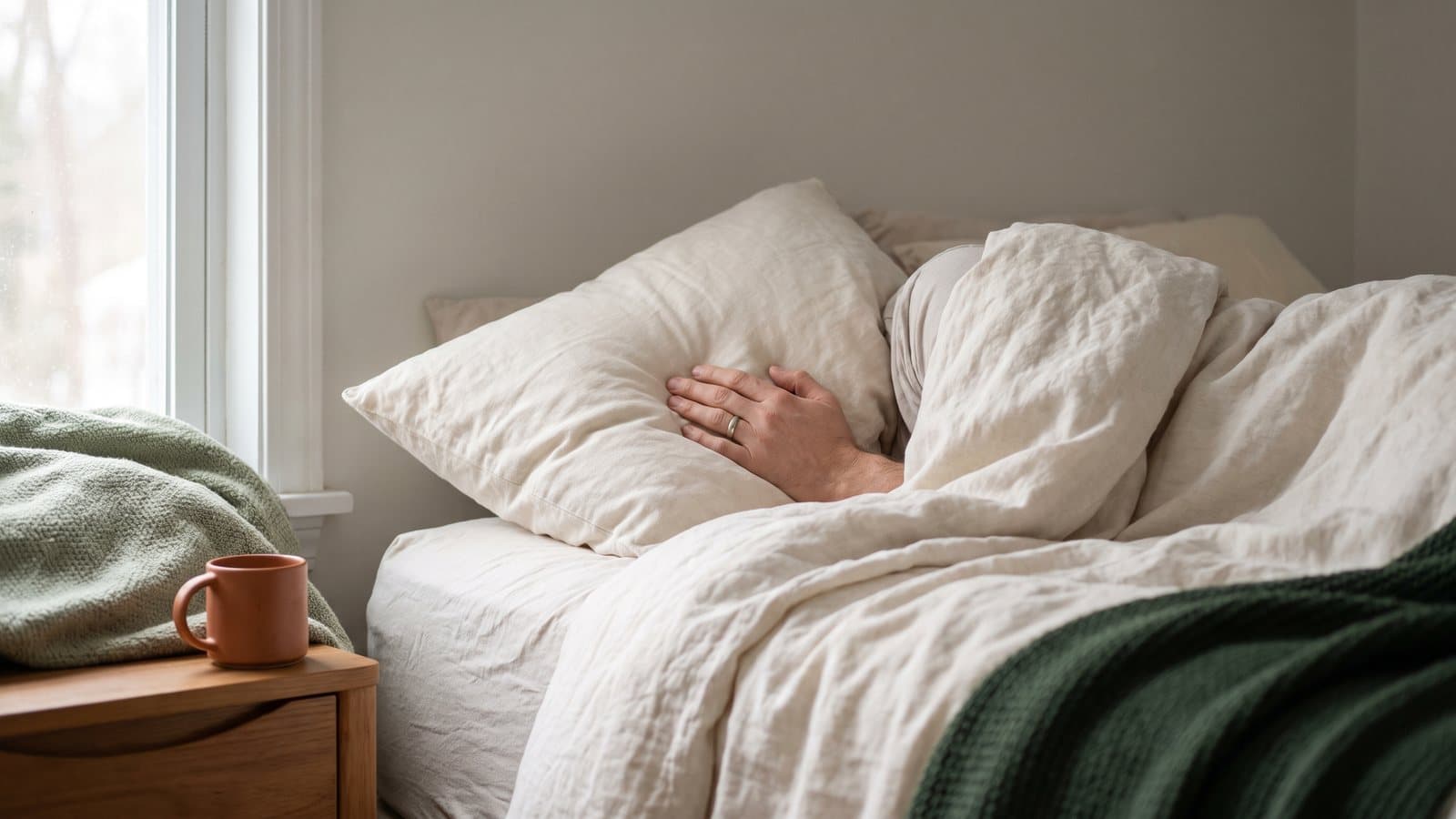
You have slept on the same side for years, and it never felt like a choice. Roll the other way and one nostril closes almost completely, no matter how clear you feel. Cedar season makes it worse: your partner has noticed you switching sides more, and some mornings you wake with a dry mouth from breathing through your mouth most of the night.
If that pattern shows up whether or not pollen counts are high, a deviated septum and sleep apnea may both be part of the picture. The septum is the wall of cartilage and bone that splits your nose in two, and when it sits off center, one side can stay narrow in every season.
Austin Sleep & Airway Health sees this question come up often this time of year: is it cedar season, or something structural that cedar season is making harder to ignore. Here is what a deviated septum actually does to your breathing at night, how to tell it apart from seasonal congestion, and when it is worth a closer look.
What Is a Deviated Septum, and How Common Is It?
The septum is thin bone and cartilage down the center of your nose. ENT Health, the patient education site of the American Academy of Otolaryngology, Head and Neck Surgery, notes that most people do not have a perfectly centered septum, and an estimated 80 percent of noses have some deviation without symptoms.
A deviated septum can be something you are born with, or the result of a nasal injury, even one from years ago. What matters is not the deviation itself, but that one nostril stays narrower than the other no matter the season, changing how you breathe day and night.
That is different from ordinary congestion. A cold clears up. Cedar season passes. A structural deviation keeps the same shape year round, which is why allergy season often makes it most noticeable.
Can a Deviated Septum Cause Sleep Apnea?
A deviated septum sits in a different spot than the soft tissue that collapses during obstructive sleep apnea, so it is rarely the root cause on its own. It can still make the rest of your airway work harder: when one side stays blocked, air pushes through a narrower path, and many people shift to mouth breathing once asleep without ever deciding to.
Mouth breathing changes the shape and stability of the airway further back. Research published in the Indian Journal of Otolaryngology and Head and Neck Surgery found a statistically significant association between an isolated deviated septum and obstructive sleep apnea, and noted that nasal surgery can improve symptoms without resolving sleep apnea on its own. Our guide to snoring versus sleep apnea explains that difference further.
Sleep apnea is confirmed only through a sleep study ordered by a physician, never by nasal shape. A deviated septum is best understood as one contributor among several, alongside tongue posture, tonsil size, and jaw position.
Deviated Septum vs. Seasonal Congestion: How to Tell the Difference
Cedar season in Central Texas typically runs December through February, with pollen often peaking in late December and January, so late January can still bring some of the year's heaviest congestion. If you already have a deviated septum, this stretch often feels worst, since seasonal swelling stacks on a passage that was already narrow.
A few patterns help tell the two apart. Cedar pollen congestion usually affects both sides, comes with itchy or watery eyes, and eases once pollen counts drop. A deviated septum favors one side consistently, month after month, and does not fully resolve once cedar season ends.
If your congestion is mostly seasonal, our guide to cedar season congestion and snoring covers what to track while pollen counts are high. If one side has felt blocked for as long as you can remember, regardless of season, that pattern points somewhere else.
What to Track If Nasal Breathing Feels Like a Nightly Struggle
A short log gives your care team something more useful than a guess. For a week or two, notice which side feels blocked when you wake, and whether it stays the same or switches.
Pay attention to whether you are breathing through your mouth at night, or only notice it once you wake with a dry mouth or sore throat. Ask a bed partner whether snoring is louder some nights, or paired with pauses or gasping. If you sleep alone, a phone recording overnight can catch what you would otherwise miss.
Note any history of a broken nose or a hard hit to the face, even years back, a common cause of a deviated septum. Bring what you gather, along with any past sleep study results, to your next visit, to help separate a structural issue from a seasonal one.
When a Deviated Septum Is Worth an Evaluation
A deviated septum on its own is common and often needs nothing at all. It is worth a closer look if one nostril stays significantly harder to breathe through most of the time, if you are a committed mouth breather at night, or if snoring is loud, frequent, and paired with pauses or gasping a partner has noticed.
It is also worth mentioning to your doctor if congestion never fully clears once cedar season ends, if you have had a nasal injury, or if daytime sleepiness and morning headaches show up alongside the nasal blockage. Those are signs worth a look, not a diagnosis.
Only a physician can diagnose sleep apnea, through a sleep study at home or in a lab, as the National Heart, Lung, and Blood Institute explains. An airway focused evaluation can help you understand whether your nose, jaw, tongue, or some combination is behind the pattern.
How Austin Sleep & Airway Health Helps With Deviated Septum and Sleep Apnea
Dr. Culotta's airway focused exam looks at nasal versus mouth breathing as one part of a larger picture, alongside tongue mobility and posture, palate width, jaw joints, tonsil size, and a detailed sleep and health history. When more detail helps, we use in-house 3D CBCT airway imaging, a 45 second, low dose scan showing airway shape and volume, nasal passages, tonsils, adenoids, and jaw position. It is an awake, upright snapshot, not a sleep study or a diagnosis of a deviated septum.
We do not diagnose or correct a deviated septum. That is an ENT's role, and we work alongside ENTs when the nose or sinuses need attention beyond what an airway exam can address. For sleep apnea, we help coordinate testing with your physician or sleep specialist.
For patients who struggle with CPAP because nasal breathing feels limited, oral appliance therapy is one option worth discussing, since it does not depend on nasal airflow the way CPAP typically does. It is not a substitute for addressing the septum itself, but it is worth raising at a visit. As Dr. Culotta says, "It's never too late to breathe, sleep, and feel better."
Frequently Asked Questions
Can a deviated septum cause sleep apnea?
A deviated septum does not usually cause sleep apnea by itself, but it can make nasal breathing harder in a way that contributes to it. When nasal airflow is limited, more people shift to mouth breathing at night, which can make the airway less stable.
Can a deviated septum cause snoring?
Yes, a narrowed nasal passage can make snoring louder or more frequent by forcing air through a smaller space or pushing you toward mouth breathing while you sleep. Snoring caused this way often improves when the nasal blockage is addressed, though results vary.
Does fixing a deviated septum resolve sleep apnea?
Septoplasty is unlikely to resolve sleep apnea entirely on its own, though it can improve nasal airflow and make CPAP more comfortable to use. Research on septal surgery generally shows improvement in symptoms rather than full resolution.
How do I know if I need surgery for a deviated septum?
Surgery is usually considered when nasal blockage significantly affects your breathing, sleep, or quality of life, not simply because a septum is off center. Many people have a deviated septum with no symptoms at all and need no treatment.
Is it normal to breathe better through one nostril than the other?
Some difference between nostrils is common and often not a concern, since nasal airflow naturally shifts sides throughout the day in most people. It is worth a closer look if one side is consistently much harder to breathe through, regardless of season.
Does a deviated septum cause mouth breathing at night?
A deviated septum can lead to mouth breathing at night when nasal airflow is limited enough that breathing through the nose alone feels difficult. ENT Health lists mouth breathing during sleep among the symptoms adults with a deviated septum may notice.
Where can I get my nose and airway evaluated in Austin?
Austin Sleep & Airway Health, at 1701 Simond Ave, Suite 107A in the Mueller area, offers airway focused evaluations that look at nasal breathing alongside the rest of your airway. Call (512) 900-9715; we are open Monday, Tuesday, Thursday, and Friday from 8:00 AM to 3:00 PM.
See What Is Behind Your Nighttime Breathing
Whether cedar season is making an old problem louder, or your nose has never quite let you breathe easily, an airway focused evaluation is a good place to start. Our in-house 3D CBCT airway imaging gives Dr. Culotta a clear look at your airway, so you leave with a fuller picture instead of a guess.
By Austin Sleep & Airway Health
This article is for general education. It is not a diagnosis and does not replace an evaluation with a qualified provider.
See your airway in 3D
A quick, low-dose CBCT airway screening shows structural details a routine exam can miss and helps guide the next step.
Keep Reading
Related articles

Breathing & Airway
Waking Up With a Dry Mouth: What It Can Tell You
Waking up with dry mouth most mornings can point to allergies, mouth breathing, or snoring, and spring pollen often makes it easier to notice.
Read more7 min read
Breathing & Airway
Sleep and Athletic Recovery: Why Night Breathing Matters
Sleep and athletic recovery are closely linked. See how night breathing affects your training recovery, and what to track before your next race.
Read more6 min read
Breathing & Airway
Cedar Fever and Snoring: Keeping Your Nose Clear in Austin
Cedar fever floods Austin with pollen each winter, and the congestion it brings can make snoring worse. Here is what to track and when to get it checked.
Read more7 min read
Free Sleep Apnea Quiz
Do You Have Sleep Apnea? Find Out Now
Snoring, fatigue, and restless nights could be signs of sleep apnea, a condition that affects your health more than you might realize. Take our quick, easy Sleep Apnea Quiz to uncover potential risk factors and determine if it’s time to seek expert care. In just a few minutes, you’ll gain valuable insights into your sleep health and take the first step toward better breathing, restful nights, and a healthier life. Don’t wait. Your journey to better sleep starts here!