Sleep Apnea & Snoring
Can Thin, Fit People Get Sleep Apnea? What Your Anatomy Says
Published 7 min read
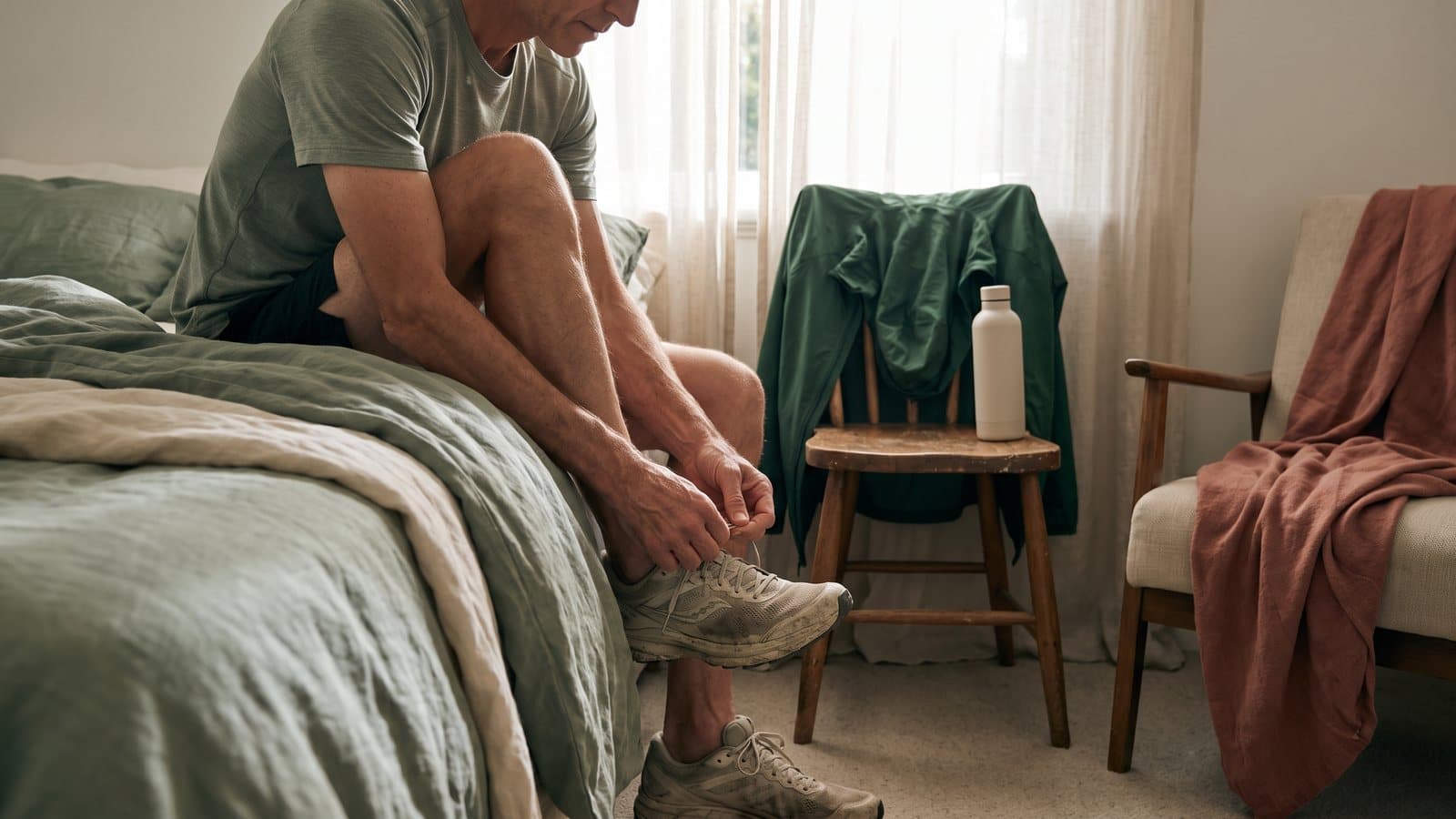
The Fittest Snorer in Your Running Group
It's 5:45 on a Saturday, and your group is stretching for the long run around Lady Bird Lake. Your fall training block is on track. Yet your partner mentioned, again, that you snored last night, and you woke up feeling like you had already run the miles.
If that sounds familiar, you may be wondering about sleep apnea in thin people, and whether it could apply to you. The usual picture of sleep apnea doesn't look like a lean runner, and that's why it can be missed.
At Austin Sleep & Airway Health, we look at the airway itself. This post explains why a fit body can still have a snug airway, where weight fits in, what to track this training season, and when an evaluation is worth it.
Why Sleep Apnea in Thin People Often Gets Missed
Yes, you can have sleep apnea if you're thin and fit. Excess weight is one of the best-known risk factors, but not the only one. The National Heart, Lung, and Blood Institute (NHLBI) notes that genes help determine the size and shape of your skull, face, and upper airway, and that sleep apnea can run in families.
The stereotype is the problem. Lean adults often assume snoring can't mean anything, and the tiredness gets filed under training fatigue. Yet one study in the Journal of Clinical Sleep Medicine found that about one in four people diagnosed with obstructive sleep apnea at a hospital sleep clinic had a body mass index in the normal range.
Our guide to how snoring differs from sleep apnea covers that distinction. Here, the focus is anatomy.
What Causes Sleep Apnea If You're Not Overweight?
During sleep, the muscles that hold your airway open relax, and whether it stays open depends on how much room there was to begin with. Training changes your heart and legs, not the bones and soft tissue that frame your airway.
A review of X-ray studies in Sleep Medicine Reviews found that, on average, adults with obstructive sleep apnea showed differences in lower jaw length and position and a narrower airway behind the tongue and palate.
Jaw Size and Position
A smaller or set-back lower jaw leaves less room for the tongue, so it sits closer to the throat. MedlinePlus lists a lower jaw that is short compared with the upper jaw as one contributing feature. The upper jaw forms both the roof of the mouth and the floor of the nose, so a narrow palate can mean less room in both places.
Tongue Size and Resting Posture
A tongue that is large for its space, or one that rests low instead of up against the palate, can fall back toward the throat during sleep. A 2020 study of people with obstructive sleep apnea and a lower BMI found the base of the tongue was the most common site of narrowing on their backs, and it often eased on their side.
Soft Palate, Tonsils, and Adenoids
The American Academy of Otolaryngology describes a long soft palate acting like a flutter valve during relaxed breathing, which is the sound we call snoring. Large tonsils and adenoids can crowd the same space in adults, not only in children.
Nasal Passages
A deviated septum, swollen nasal tissue, or allergy congestion makes the nose harder to breathe through, and ENT specialists note it takes extra effort to pull air past. Many people shift to mouth breathing at night, which can let the jaw drop and the tongue slide back. Fall allergy season can make this more noticeable.
Researchers also describe traits unrelated to size, like how strongly throat muscles respond in sleep and how easily you wake.
Does Weight Still Matter If You're Already Lean?
Yes. Weight remains one of the most consistent risk factors for obstructive sleep apnea, and NHLBI notes that maintaining a healthy weight can help prevent or treat sleep apnea linked to excess weight. A long-running Wisconsin study published in JAMA found that moderate weight gain over four years was linked with more breathing events during sleep, and moderate loss with fewer.
Still, weight doesn't explain everyone. A lean person with a set-back jaw and a blocked nose may have less airway room than a heavier person with a wide palate. So the useful question isn't whether you're thin enough to rule this out. It's how much room your airway has once you're asleep.
What to Track During Your Fall Training Block
You already log miles and splits. A few weeks of night notes can be just as useful at a visit:
- Snoring: ask a partner or record a few nights with your phone, and note whether it's worse on your back.
- Pauses, gasps, or choking sounds someone else hears.
- How you wake: dry mouth, morning headache, or a tight, tired jaw.
- Your nose: stuffy at night, worse with allergies, or mouth breathing even on easy runs.
- Patterns after a post-race drink, hard training days, or travel.
- Family history of snoring or sleep apnea, plus your history with braces, tonsils, or nasal injuries.
If your watch has flagged your sleep, see what to do after a smartwatch sleep apnea alert. Our educational adult sleep apnea screening can help you organize what you're noticing, though it can't confirm or rule anything out.
When Snoring in a Fit Body Is Worth an Evaluation
It's worth a look if you snore most nights, especially if someone notices pauses or gasping, or if you wake unrefreshed despite consistent sleep and sensible training. Morning headaches, recurring dry mouth, and recovery that lags behind your training are worth mentioning to your doctor too. So is a family history of sleep apnea paired with a set-back jaw, a narrow palate, or a nose that rarely feels clear.
Only a physician can diagnose sleep apnea, through a home sleep test or an in-lab sleep study, and our comparison of home sleep tests and in-lab studies explains both. None of these signs is a verdict on your fitness. They're simply information.
How Austin Sleep & Airway Health Helps Fit Adults Who Snore
Dr. Culotta, a Diplomate of the American Board of Dental Sleep Medicine, starts with the structures this post describes.
Our in-house 3D CBCT airway scan takes about 45 seconds, uses low radiation, and shows airway shape and volume along with the tonsils, adenoids, nasal passages, and jaw position. It's an awake, upright snapshot, so it is not a sleep study and does not diagnose sleep apnea, but it can show where space looks tight.
The airway-focused exam adds tongue mobility and resting posture, oral ties, palate width, bite, jaw joints, tonsil size, nose versus mouth breathing, and signs of clenching, plus a detailed sleep and health history.
From there, we connect the dots. We can help coordinate a sleep study with a physician, loop in an ENT when the nose or tonsils need a closer look, and work alongside the independent myofunctional therapists in our Myofunctional Collaborative Space. If a physician confirms sleep apnea, a custom oral appliance is one option alongside CPAP. For snoring, we also offer non-surgical laser soft palate tightening.
Frequently Asked Questions
Can you have sleep apnea if you're not overweight?
Yes, people at a normal weight can have obstructive sleep apnea, because jaw size, tongue position, tonsils, nasal blockage, family history, and age all shape the airway. MedlinePlus lists a large tongue and large tonsils among the features that can narrow it.
Is sleep apnea in thin people usually the central type?
Not usually, because obstructive sleep apnea, where the upper airway narrows or closes during sleep, is the most common type overall, according to NHLBI. Central sleep apnea means the brain does not send the signals needed to breathe, and a sleep study tells the two apart.
Why do I snore if I'm not overweight?
Snoring happens when relaxed tissue vibrates as air squeezes through a narrowed space, and a long soft palate, large tonsils, or a stuffy nose can narrow it at any weight. Back sleeping and evening alcohol can make it more noticeable.
Can running or regular exercise make sleep apnea go away?
Exercise can help support better sleep, but it cannot reshape your jaw, palate, or nasal passages, so it isn't a reason to skip an evaluation if symptoms continue. A 2014 meta-analysis in the journal Lung found supervised exercise modestly lowered sleep apnea severity in small groups of adults, with little weight change.
Can a young, healthy adult have sleep apnea?
Yes, sleep apnea can show up in young, healthy adults, although NHLBI notes that risk tends to rise with age and that it is more common in men. In younger, fit adults, enlarged tonsils, a narrow palate, or a set-back jaw can be part of the picture.
Where can I get an airway evaluation in Austin if I'm fit and still snore?
Austin Sleep & Airway Health offers airway evaluations with in-house 3D CBCT imaging at 1701 Simond Ave, Suite 107A, in Austin's Mueller area. Call (512) 900-9715 or email hello@austinsleephealth.com; we're open Monday, Tuesday, Thursday, and Friday, 8:00 AM to 3:00 PM.
See How Much Room Your Airway Has
If you're training hard, sleeping enough, and still snoring or waking unrefreshed, a closer look at your airway can help explain why. As Dr. Culotta puts it, "Positive change is possible at any age. Awareness is the first step." Learn what a 3D CBCT airway screening shows, and book a visit when you're ready.
By Austin Sleep & Airway Health
This article is for general education. It is not a diagnosis and does not replace an evaluation with a qualified provider.
See your airway in 3D
A quick, low-dose CBCT airway screening shows structural details a routine exam can miss and helps guide the next step.
Keep Reading
Related articles

Sleep Apnea & Snoring
Acid Reflux at Night and Sleep Apnea: How They Connect
Acid reflux and sleep apnea often overlap at night. Here is what research says about the connection, what to notice, and when to get it checked.
Read more7 min read
Sleep Apnea & Snoring
Waking Up to Pee at Night: A Sleep Apnea Connection?
Waking up to pee at night more than once? It could be summer hydration, or your airway. Here is what is normal and worth mentioning at a visit.
Read more7 min read
Sleep Apnea & Snoring
Waking Up With a Headache? What It Could Mean
Waking up with a headache in Austin's summer heat? See how dehydration, jaw clenching, and sleep apnea can each play a role, and what to track.
Read more7 min read
Free Sleep Apnea Quiz
Do You Have Sleep Apnea? Find Out Now
Snoring, fatigue, and restless nights could be signs of sleep apnea, a condition that affects your health more than you might realize. Take our quick, easy Sleep Apnea Quiz to uncover potential risk factors and determine if it’s time to seek expert care. In just a few minutes, you’ll gain valuable insights into your sleep health and take the first step toward better breathing, restful nights, and a healthier life. Don’t wait. Your journey to better sleep starts here!