Sleep Apnea & Snoring
Insomnia or Sleep Apnea? When It Might Be Both
Published 7 min read
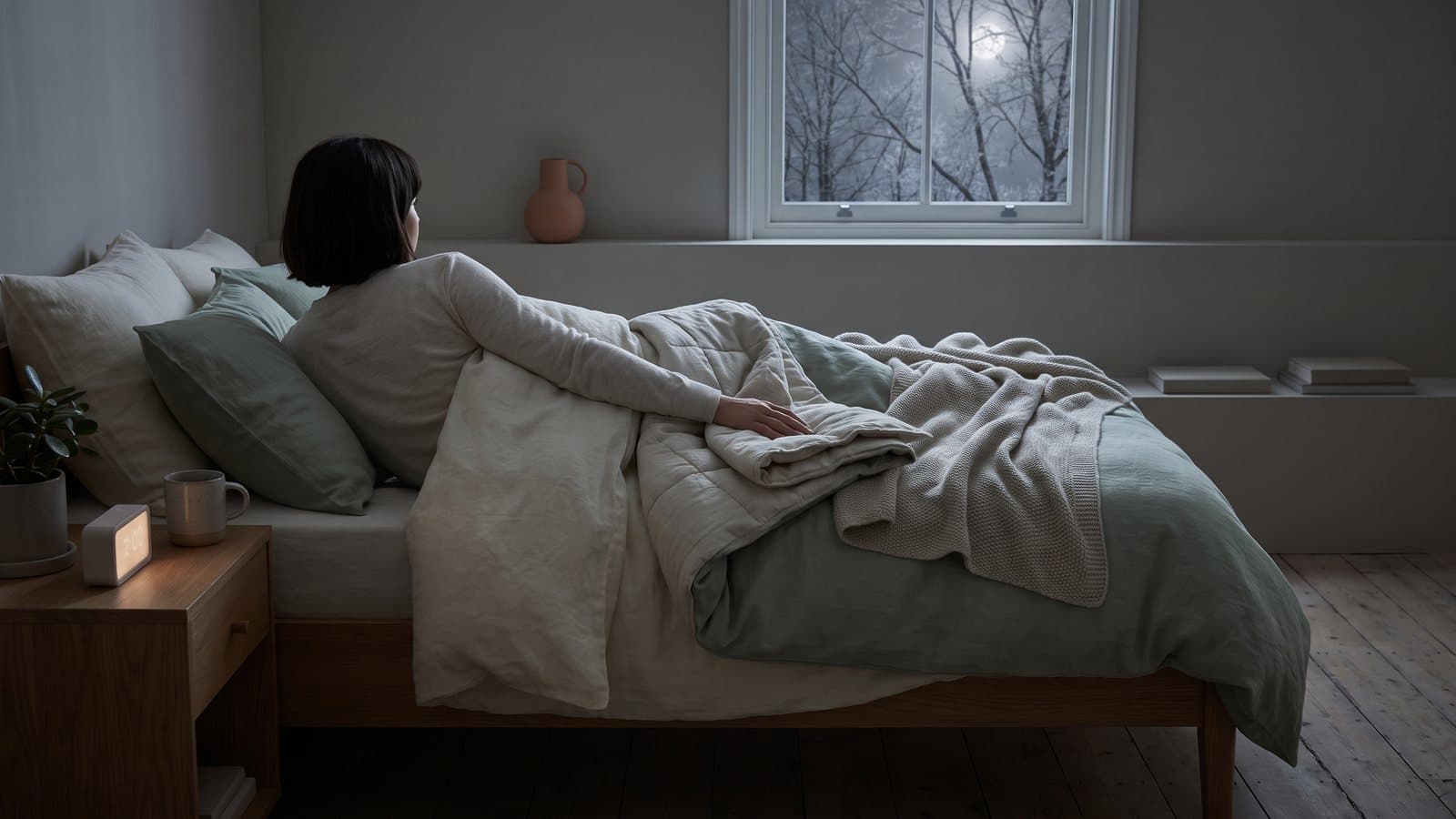
Wide Awake at 2 a.m. in the Dead of Winter
The days are short, the house is dark by six, and you were in bed early, ready to catch up. Instead you are staring at the ceiling at 2 a.m., wired and exhausted at the same time. By the next afternoon you can barely keep your eyes open, and the whole thing repeats.
Insomnia and sleep apnea can look a lot alike from the inside, and mid-winter, with darker evenings and disrupted routines, tends to bring both to the surface. Trouble falling asleep, waking at odd hours, and daytime exhaustion show up with each one, which makes it genuinely hard to know which you are dealing with, or whether it is both.
At Austin Sleep & Airway Health, we look at sleep through the airway, since breathing problems are an insomnia trigger many people never consider. This post covers how the two conditions differ, why they so often travel together, and what is worth tracking before your next appointment.
Insomnia and Sleep Apnea: How They're Different
The two conditions are not the same thing, even though they share a lot of the same daytime fallout.
What insomnia looks like
Insomnia is trouble falling asleep, staying asleep, or waking too early, with a mind that will not quiet down. MedlinePlus describes it as a common sleep disorder that can be short term, tied to stress or a schedule change, or chronic, lasting a month or longer. There is usually no breathing problem involved.
What sleep apnea looks like
Sleep apnea is a breathing problem. The airway narrows or closes repeatedly during sleep, and the brain briefly rouses the body to reopen it, often without the person waking up enough to remember it. The result is fragmented, unrefreshing sleep, sometimes alongside loud snoring, gasping, or morning headaches, even when total hours logged look normal.
Can You Have Insomnia and Sleep Apnea at the Same Time?
Yes. Sleep medicine literature describes this overlap as comorbid insomnia and sleep apnea, sometimes shortened to COMISA, and a peer-reviewed review in PMC notes it is common, not rare. Research summarized there suggests that a substantial share of people with sleep apnea also report insomnia symptoms, and the reverse holds too.
The overlap happens partly because the two feed each other. The repeated arousals from sleep apnea can leave the nervous system too activated to settle back down easily, which can look exactly like insomnia from the inside. Meanwhile, an already anxious or wakeful mind can make it harder to fall back asleep after a breathing event interrupts you.
Why One Can Hide the Other
This overlap is also why insomnia and sleep apnea get missed. Lying awake with racing thoughts makes it natural to assume the problem is purely mental. Sleeping through the night without noticing anything can make sleep apnea seem unlikely, even though most people are not aware of their own breathing pauses.
Clues that point toward sleep apnea
Snoring, gasping, or pauses a partner notices, morning headaches, a dry mouth on waking, and needing the bathroom more than once overnight all point toward a breathing component worth a look, even if falling asleep itself is not the struggle.
Clues that point toward insomnia on its own
A racing or worried mind at bedtime, clock watching, and trouble falling asleep even when you feel physically tired, with no reported snoring or breathing pauses, lean more toward insomnia as its own condition rather than a symptom of something else.
What You Can Track Right Now
You do not need special equipment to start making sense of a pattern, just a notebook or notes app by the bed for a week or two. Track:
- What time you got into bed, and roughly how long it took to fall asleep.
- How many times you woke up, and whether you fell back asleep easily.
- Anything a partner notices: snoring, gasps, pauses, or restlessness.
- Morning symptoms: headache, dry mouth, or a sore jaw.
- How rested you felt the next day, on a simple one to five scale.
A pattern like this turns a vague sense that something is off into something specific a clinician can work with, whether that clinician is treating the insomnia, the airway, or both.
When It's Worth an Evaluation
Two or three weeks of notes is usually enough to see a shape. It is worth a closer look if trouble falling or staying asleep continues most nights despite steady habits, if a partner mentions snoring or breathing pauses, or if you keep waking unrefreshed after what should be enough sleep, with daytime drowsiness that affects work, mood, or driving.
None of this is a diagnosis on its own. Only a physician can diagnose sleep apnea, through a home sleep test or an in-lab study, and insomnia disorder has its own clinical criteria a sleep-trained clinician evaluates. Bringing your notes to that first conversation gives everyone a real starting point.
CBT-I and Sleep Apnea: Does One Come First?
For chronic insomnia, cognitive behavioral therapy for insomnia, known as CBT-I, is the first-line treatment recommended by the American Academy of Sleep Medicine and the American College of Physicians, ahead of medication. CBT-I is delivered by trained clinicians such as sleep psychologists or behavioral sleep specialists, not by our practice, and it works by changing the sleep habits and thought patterns that keep insomnia going.
When both conditions are present, some research suggests addressing insomnia alongside sleep apnea treatment, rather than assuming one will resolve the other, tends to work best. A custom oral appliance or CPAP, even for someone who has found CPAP hard to stick with before, treats the breathing side, while CBT-I addresses the sleep-onset side, and many people benefit from both working together.
How Austin Sleep & Airway Health Helps With Insomnia and Sleep Apnea
Dr. Culotta is a Diplomate of the American Board of Dental Sleep Medicine and a Qualified Dentist with the American Academy of Dental Sleep Medicine. When a patient describes both wakefulness and exhaustion, she starts with the airway, since that is the piece dental sleep medicine is positioned to evaluate.
The airway-focused exam looks at tongue mobility and posture, oral ties, palate width, bite, jaw joints, tonsil size, nose versus mouth breathing, and signs of clenching or grinding, along with a detailed sleep and health history, including your tracked notes. Our in-house 3D CBCT airway imaging, a quick, low dose scan, can add a look at airway shape and volume when it is relevant.
From there, we coordinate. That might mean a sleep study with your physician to check for sleep apnea, a referral toward CBT-I for the insomnia piece, or both running in parallel. If sleep apnea is confirmed, a custom oral appliance is one option alongside CPAP, and some people use both.
Frequently Asked Questions
Can you have insomnia and sleep apnea at the same time?
Yes, insomnia and sleep apnea can occur together, and sleep medicine research refers to this overlap as comorbid insomnia and sleep apnea, or COMISA. Studies reviewed in PMC describe it as common rather than rare, and each condition can make the other harder to notice.
Does sleep apnea cause insomnia, or does insomnia cause sleep apnea?
Both directions appear to happen, since sleep apnea arousals can trigger insomnia-like wakefulness, and an already wakeful mind can make it harder to settle after any nighttime breathing event. Repeated breathing pauses activate the nervous system, which can feel just like classic insomnia from the inside.
How do I know if it's insomnia or sleep apnea keeping me up?
Racing thoughts, clock watching, and trouble falling asleep with no reported breathing issues point toward insomnia on its own. Snoring, gasping, pauses a partner notices, or morning headaches point toward a breathing component worth a look, even if falling asleep itself is not hard.
Will treating my sleep apnea fix my insomnia?
It can help for some people, since quieter, steadier breathing may reduce the arousals that keep the nervous system on edge, but it does not always resolve insomnia on its own. Many people do best when insomnia is addressed directly, alongside airway treatment, rather than assumed to disappear.
What is CBT-I, and do I need it if I already have sleep apnea?
CBT-I, cognitive behavioral therapy for insomnia, is the first-line treatment for chronic insomnia recommended by the American Academy of Sleep Medicine and the American College of Physicians. It is delivered by trained clinicians rather than by our practice, and many people combine it with airway treatment when both conditions are present.
Where can I get evaluated for insomnia and sleep apnea in Austin?
Austin Sleep & Airway Health offers airway evaluations, including in-house 3D CBCT imaging, at 1701 Simond Ave, Suite 107A, in Austin's Mueller area. Call (512) 900-9715 or email hello@austinsleephealth.com. We are open Monday, Tuesday, Thursday, and Friday, 8:00 AM to 3:00 PM.
A Clearer Night Starts With a Closer Look
If mid-winter has you wide awake and worn out in equal measure, you do not have to guess which problem you are solving. Our adult sleep apnea screening is a short, educational set of questions that can help you organize what you have noticed before you bring it to Dr. Culotta or your physician. As Dr. Culotta puts it, "It's never too late to breathe, sleep, and feel better."
By Austin Sleep & Airway Health
This article is for general education. It is not a diagnosis and does not replace an evaluation with a qualified provider.
Wondering whether a sleep evaluation is right for you?
Take our quick, educational adult sleep screening to better understand your risk factors and what to bring to a visit.
Keep Reading
Related articles

Sleep Apnea & Snoring
Acid Reflux at Night and Sleep Apnea: How They Connect
Acid reflux and sleep apnea often overlap at night. Here is what research says about the connection, what to notice, and when to get it checked.
Read more7 min read
Sleep Apnea & Snoring
Waking Up to Pee at Night: A Sleep Apnea Connection?
Waking up to pee at night more than once? It could be summer hydration, or your airway. Here is what is normal and worth mentioning at a visit.
Read more7 min read
Sleep Apnea & Snoring
Waking Up With a Headache? What It Could Mean
Waking up with a headache in Austin's summer heat? See how dehydration, jaw clenching, and sleep apnea can each play a role, and what to track.
Read more7 min read