
Evaluation & Treatment
How to Keep a Sleep Diary Before Your Sleep Evaluation
Published 6 min read

The Sleep Evaluation Is on the Calendar. Now What?
You finally booked the appointment: a sleep evaluation, maybe a first visit with a sleep physician, maybe your first conversation with Dr. Culotta about the snoring your partner keeps mentioning. Then the intake paperwork arrives, and one line stops you. Please keep a sleep diary for the week before your visit.
It is a fair ask, and also a vague one. What counts as sleep? Do naps matter? What if last Tuesday looked nothing like last Wednesday?
This week also brings Sleep Awareness Week, the National Sleep Foundation's annual campaign, which for 2026 runs March 8 through 14 and lines up with the start of daylight saving time on Sunday, March 8, when clocks move forward and most of us lose an hour of sleep overnight. It is a fitting week to start paying closer attention to how you actually sleep. At Austin Sleep & Airway Health, we ask many patients to bring a short sleep diary to their evaluation, and this guide covers what to track, what it can show, and how to make good use of it.
What Is a Sleep Diary, and Why Do Sleep Physicians Ask for One?
A sleep diary, also called a sleep log, is a simple nightly record of when you went to bed, how you slept, and what happened around it during the day. The Sleep Foundation describes it as a daily record that gives a physician more specific, reliable information than a general impression of sleeping poorly.
Clinical guidance from the American Academy of Sleep Medicine treats a sleep diary as a standard part of a baseline evaluation, especially before insomnia treatment begins, and notes that patients are commonly asked to keep one for one to two weeks. A diary will not diagnose sleep apnea or any other sleep disorder. Only a physician can do that, usually through a sleep study. If your physician has also mentioned a home sleep test or an in-lab study, our guide to home sleep tests versus in-lab sleep studies walks through what each one measures. What a diary adds is a dated, specific picture of your week instead of a memory that blurs after a few nights.
What to Track Each Night: A Simple 7-Night Sleep Log
You do not need a special app or a complicated chart. A notebook by the bed, or a note on your phone, works fine. For seven nights, jot down:
- The time you got into bed and the time you actually turned out the light
- Roughly how long it took you to fall asleep
- Any times you woke during the night, and about how long you were awake
- The time you woke for good and the time you got out of bed
- Any naps during the day, and about how long they lasted
- Caffeine, alcohol, or any medications, with a rough time
- How rested you felt in the morning and how your energy held up in the afternoon
- Anything a partner mentioned overnight, such as snoring, gasping, restlessness, or pauses in breathing
Keep the entries short. A phrase is enough, such as noting you were up twice but fell back asleep fast, or that a partner said the snoring stopped and started. The goal is a pattern across a week, not a perfect record of any single night.
What Your Sleep Diary Can Reveal About Your Airway
Patterns you might not notice on your own
A week on paper often shows things that are easy to miss night to night. Weekday bedtimes may drift later than you realized. Naps may run longest on the days you feel worst. A partner's notes about snoring may cluster on nights you had wine with dinner. None of that is a diagnosis, but it gives you and your physician real material to work with instead of guesswork.
How Dr. Culotta reviews it during your visit
When you bring a sleep diary to Austin Sleep & Airway Health, Dr. Culotta looks at it alongside an airway-focused exam: tongue mobility and resting posture, oral ties, palate width, bite, jaw joints, tonsil size, and whether you tend to breathe through your nose or your mouth. If certain nights or symptoms stand out, our in-house CBCT airway imaging, an awake, upright scan that takes about 45 seconds at a low dose, can add context about airway shape, volume, and jaw position. None of this replaces a sleep study. It connects what you are noticing at night to what is happening in your airway.
When It's Worth an Evaluation
Loud, regular snoring is worth a look, especially if your diary or a partner's notes show pauses, gasping, or restlessness alongside it. Waking unrefreshed after what looks like a full night on paper, or feeling foggy through the afternoon on most days of your log, is also worth mentioning to your doctor. If you are not sure whether what you are noticing is worth a conversation, our adult sleep and airway screening is a calm, educational starting point.
You do not need a finished two week diary to start. Even a few nights of notes give Dr. Culotta something concrete to build from, and it is never too late to bring your questions in. Awareness is the first step, and starting the log itself is often that first step.
How Austin Sleep & Airway Health Helps With Your Sleep Diary and Evaluation
Bring your sleep diary, however complete, to your visit. Dr. Culotta, a Diplomate of the American Board of Dental Sleep Medicine, reviews it alongside a full airway exam and, when it is useful, our in-house CBCT airway imaging, to understand the shape of your week rather than a single symptom. We coordinate with your sleep physician when a diagnostic sleep study is the right next step, and we work alongside ENTs and myofunctional therapists when the nose, tonsils, or oral muscles are part of the picture.
Dr. Culotta likes to say, "It's never too late to breathe, sleep, and feel better." Whether you are just starting a sleep diary this week or you have been tracking for months, our team can help you turn those notes into a clear next step, whether that is an oral appliance conversation, a referral, or simply a plan for what to watch next.
Frequently Asked Questions
How long should I keep a sleep diary before my sleep evaluation?
Most physicians ask for one to two weeks of entries, though even a few nights of notes are useful if your appointment is close. Clinical guidance from the American Academy of Sleep Medicine describes one to two weeks as the typical window before treatment decisions are made.
Does my doctor actually use the sleep diary I fill out?
Yes, a sleep diary gives your physician dated, specific details instead of a general impression, and many patients also use it to spot their own patterns. Notes about snoring or restlessness lining up with certain nights, for example, can be useful to bring up out loud.
What exactly should I write down each night?
Track your bedtime, how long it took to fall asleep, any awakenings, your final wake time, naps, caffeine or alcohol, and how rested you felt. A short phrase for each entry is enough, and consistency across a week matters more than detail on any single night.
Can a bed partner's notes count as part of my sleep diary?
Yes, a partner's observations about snoring, gasping, or pauses in breathing are a useful addition to your own notes, since you cannot observe your own breathing while asleep. Add a line for whatever they mention, even briefly.
Is a sleep diary the same as a sleep study?
No, a sleep diary is a subjective record you keep yourself at home, while a sleep study is a physician ordered overnight test that measures your breathing and oxygen levels. A diary can support a sleep study by giving context, but only a physician diagnoses sleep apnea, through a sleep study.
Where can I bring my sleep diary for a sleep evaluation in Austin?
Austin Sleep & Airway Health, in Austin's Mueller area, reviews sleep diaries during an airway-focused exam and can coordinate a sleep study with your physician. Call us at (512) 900-9715 to get started.
Turn Your Sleep Diary Into a Plan
If you already have a few nights of notes, or you are starting your sleep diary this week, bring it to a consultation with Austin Sleep & Airway Health, and Dr. Culotta will review it alongside a full airway exam to help map out your next step.
By Austin Sleep & Airway Health
This article is for general education. It is not a diagnosis and does not replace an evaluation with a qualified provider.
Ready to talk it through?
Book a visit with Dr. Culotta to review your sleep, breathing, and airway, and map out a next step that fits you.
Keep Reading
Related articles

Evaluation & Treatment
Sleep Study Results Explained: AHI, Oxygen, and Next Steps
Your sleep study results are in. Here is what AHI, RDI, ODI, and your oxygen numbers actually mean, and what to ask your physician about next steps.
Read more7 min read
Evaluation & Treatment
Night Guard vs. Sleep Apnea Appliance: What's the Difference?
See how a standard night guard differs from a sleep apnea appliance, what the research really says, and when an evaluation helps you choose right.
Read more7 min read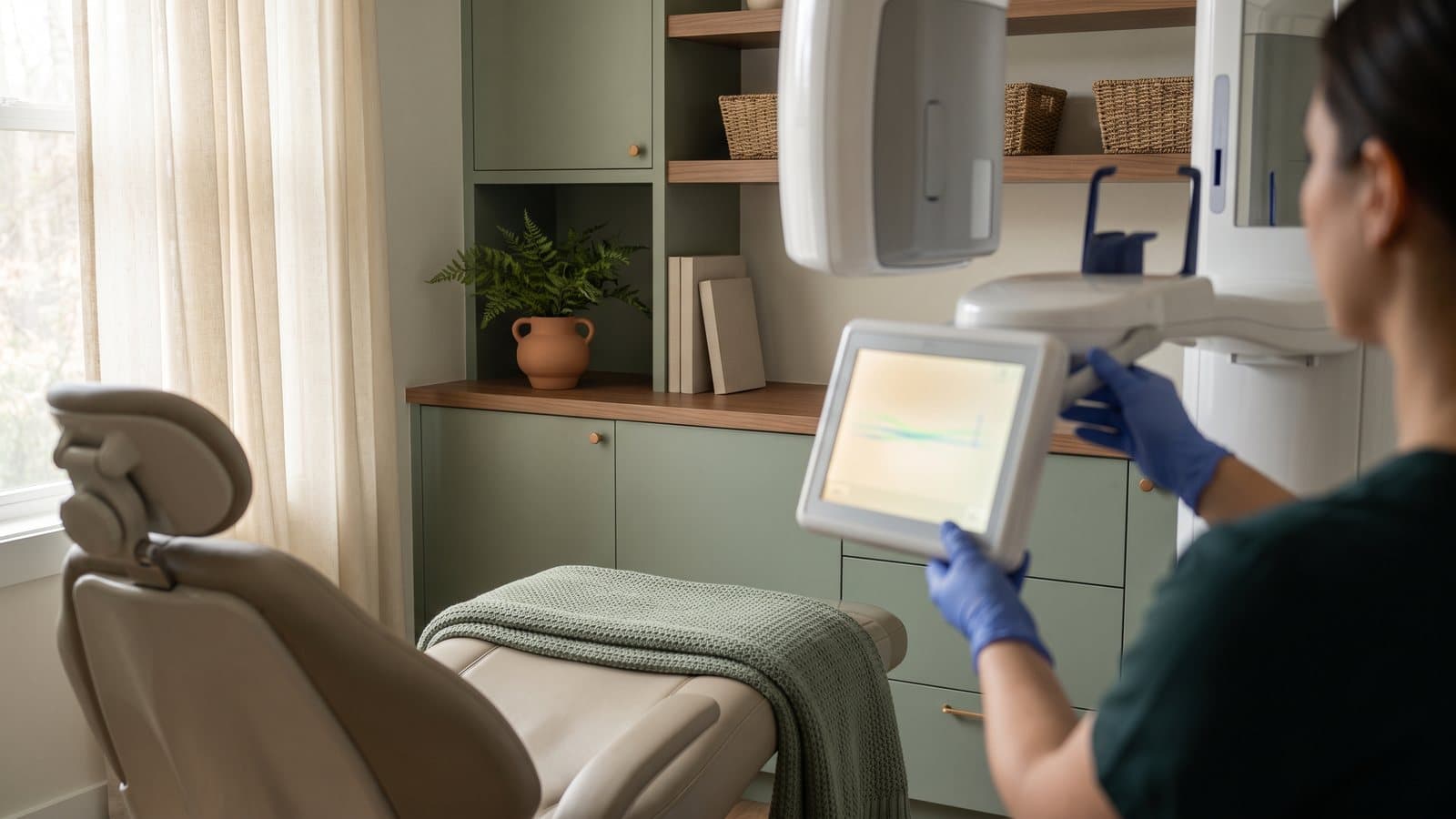
Evaluation & Treatment
Is a CBCT Scan Safe? Radiation and Airway Imaging Explained
See how much radiation a CBCT scan uses, how the ALARA principle keeps every scan low, and what Dr. Culotta looks for during your airway evaluation.
Read more7 min read
Free Sleep Apnea Quiz
Do You Have Sleep Apnea? Find Out Now
Snoring, fatigue, and restless nights could be signs of sleep apnea, a condition that affects your health more than you might realize. Take our quick, easy Sleep Apnea Quiz to uncover potential risk factors and determine if it’s time to seek expert care. In just a few minutes, you’ll gain valuable insights into your sleep health and take the first step toward better breathing, restful nights, and a healthier life. Don’t wait. Your journey to better sleep starts here!